
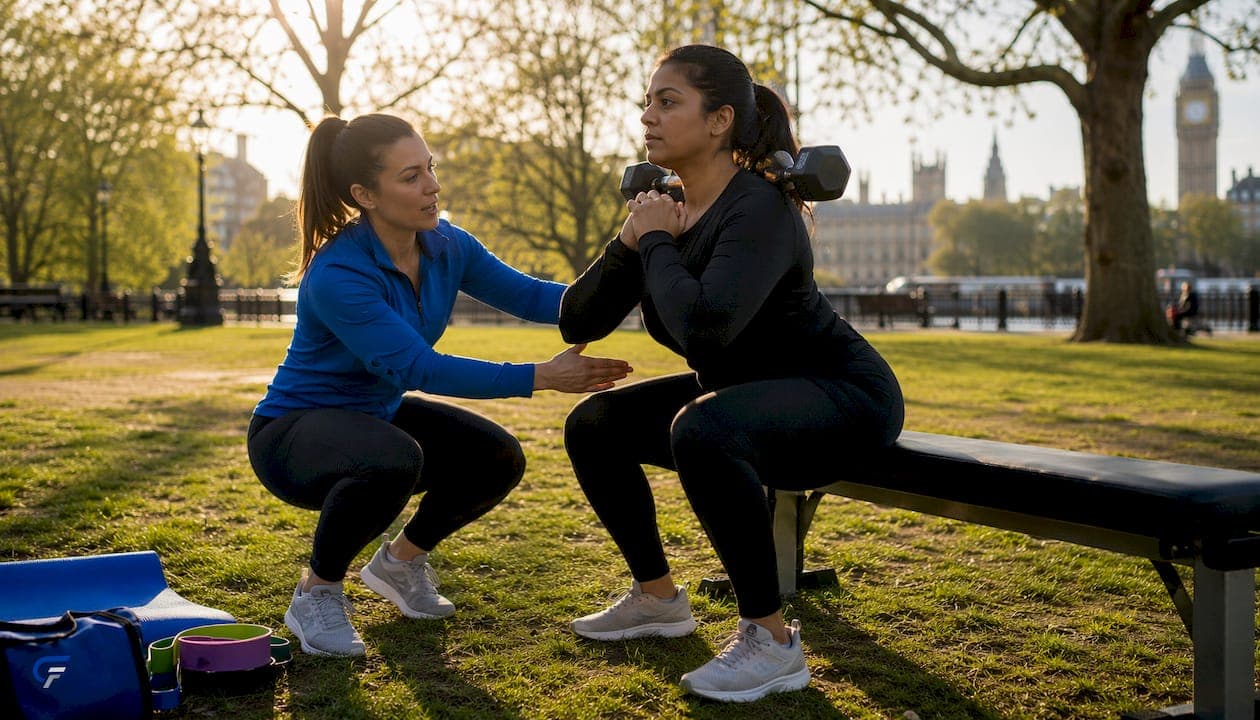
The fastest way to find a female personal trainer in London is to search Yourcoachify, filter by specialism, location and verified reviews, then book a consultation. You get a shortlist of vetted coaches in minutes, with qualifications, transformation galleries and client ratings all in one place.
Here is how to move from searching to booked in three steps:
- Filter first. On Yourcoachify, select "female trainer," your specialism (weight loss, pre/postnatal, menopause, strength) and your preferred area of London.
- Shortlist by trust signals. Look for a Level 3 PT qualification, CIMSPA membership or equivalent, verified client reviews, and confirmation of first-aid/CPR certification. For home visits, a DBS check matters too.
- Book a consultation. Most coaches offer a free or low-cost discovery call. Use it to assess communication style, ask about their programming approach and confirm availability before committing to a package.
A gender-aware coaching approach makes gym environments less intimidating and produces safer, more relevant programming for women — which is why choosing a female specialist rather than a generalist often leads to better early results.
Table of Contents
- What service formats can you book with a female fitness coach in London?
- Where do female personal trainers operate across London?
- Which women-focused specialisms should you prioritise?
- What does personal training for women typically cost in London?
- How do you vet and choose the right female personal trainer?
- What should you expect in your first session and the first 4–8 weeks?
- Why use Yourcoachify to find a female personal trainer in London?
- Key takeaways
- What actually matters when you choose a female personal trainer
- Ready to find your female personal trainer in London?
- Useful sources for women's fitness and trainer qualifications in the UK
What service formats can you book with a female fitness coach in London?
Not every training format suits every goal or schedule. Understanding your options before you search saves time and helps you match the right structure to your life.
| Format | Session length | Coach attention | Best for | Pricing model | Scheduling flexibility |
|---|---|---|---|---|---|
| One-to-one (in-person) | 45–60 min | Fully individual | Strength, rehab, postnatal, menopause | Pay-as-you-go or packs | High — set around your diary |
| Semi-private / small-group | 45–60 min | Shared (2–4 clients) | Weight loss, general fitness, accountability | Packs or monthly | Moderate — fixed class slots |
| Bootcamp | 45–60 min | Group (5 clients) | Cardio fitness, community motivation | Drop-in or monthly | Low — fixed schedule |
| Online coaching | Flexible | Asynchronous or live | Busy professionals, travel, hybrid needs | Monthly subscription | Very high — train any time |
| Hybrid (in-person + online) | Mixed | Mixed | Consistency through schedule changes | Monthly or bespoke | Very high |
One-to-one sessions give you the most tailored attention, which matters most when your goals are specific — postnatal recovery, managing perimenopausal symptoms, or returning from injury. Online coaching is widely used as a full-service or continuity option for clients with irregular schedules, and many London trainers now offer it alongside in-person work as standard.
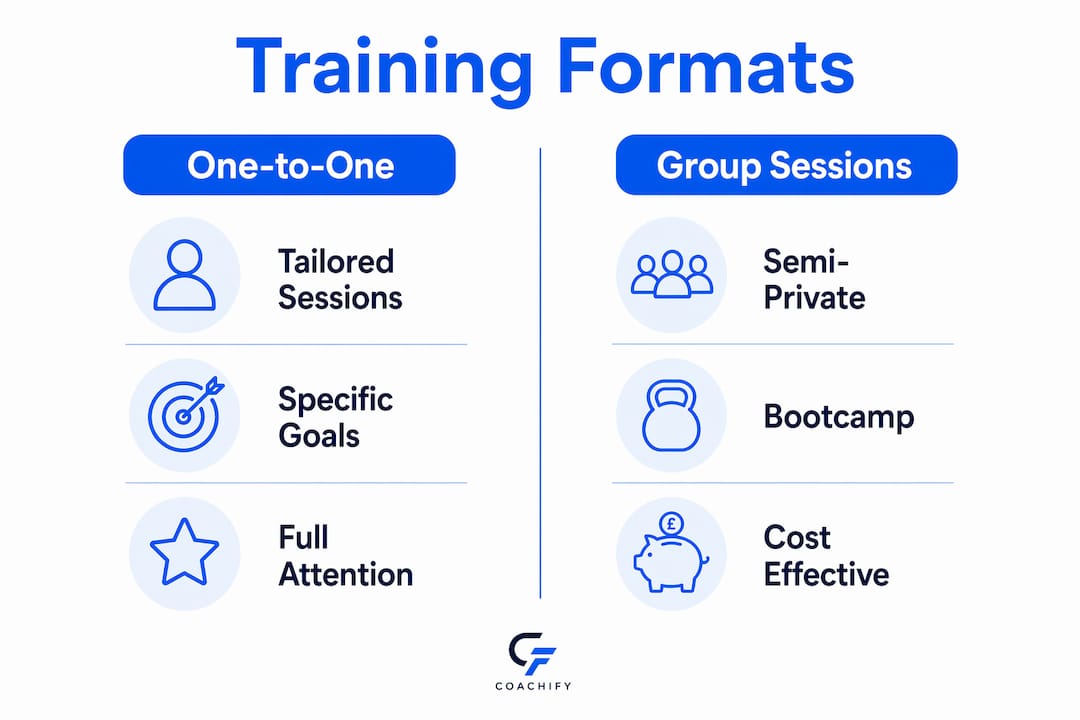
Semi-private and bootcamp formats cost less per session and suit women who thrive with group energy. The trade-off is less individual programming, so they work best once you have a solid movement foundation.
Where do female personal trainers operate across London?
London trainers work across five main venue types, and the right one for you depends on your lifestyle more than your fitness level.

Gym. Most trainers are affiliated with one or more commercial gyms. You get access to full equipment, changing facilities and a consistent environment. The downside is that you pay a gym membership on top of PT fees, and peak-hour floors can feel crowded.
Private studio. Smaller, quieter and often women-only. Studios offer a more focused atmosphere and tend to attract trainers who specialise in specific populations. Equipment is usually well-chosen rather than exhaustive.
Home visits. A trainer comes to you, which removes the commute entirely. This suits postnatal clients, anyone with mobility considerations, or women who simply prefer privacy. For home visits, always confirm that your trainer holds a DBS check and public liability insurance.
Park and outdoor sessions. London's parks — from Primrose Hill to Victoria Park — are popular training venues year-round. Outdoor sessions tend to be energising and cost-effective, but weather is a real variable. Ask your trainer what the wet-weather contingency is before you commit.
Fully online. No venue at all. You train at home or wherever you are, following a live or pre-recorded programme. Location convenience strongly influences long-term adherence, and many London clients switch between gym, park and home-based training to maintain consistency.
Venue-choice checklist:
- Travel time under about a half hour — beyond that, attendance drops
- Equipment matches your programme (barbells for strength, mats for postnatal rehab)
- Privacy level suits your comfort
- Weather contingency exists for outdoor sessions
- Parking or transport links are practical for your schedule
Pro Tip: As seasons change, so does what works. Many trainers are happy to shift between park sessions in summer and home or gym sessions in winter. Ask about this flexibility upfront — it is one of the clearest signs of a coach who prioritises your consistency over their convenience.
Which women-focused specialisms should you prioritise?
Choosing a trainer with the right specialism is not about credentials for their own sake. It is about safe, effective programming that accounts for your physiology at your specific life stage.
Common female-focused specialisms to look for:
- Antenatal and postnatal training. Covers safe exercise during pregnancy and recovery after birth, including pelvic-floor rehabilitation and diastasis recti management. Look for an accredited pre/postnatal certification — general PT experience alone is not sufficient for this population.
- Menopausal and perimenopausal support. Focuses on bone density, muscle retention, sleep quality and mood. A holistic approach combining nutrition, stress management and mindset with exercise is particularly effective during this transition.
- Hormone-aware training. Programmes adjusted to the menstrual cycle — intensity and volume vary across phases to work with your hormones rather than against them. Ask whether the trainer has studied cycle-syncing methodology or a recognised equivalent.
- Pelvic-floor and core rehabilitation. Often needed postnatally or after pelvic surgery. Trainers working in this area frequently collaborate with physiotherapists — ask whether they have a referral network.
- Weight management. Sustainable fat loss through habit-based nutrition and progressive training, rather than crash protocols. Common fitness concerns for women include weight management, energy and hormonal balance, and the best programmes address all three together.
- Strength and conditioning. Building functional strength, improving posture and increasing bone density. Relevant at every life stage, but particularly valuable from the mid-thirties onwards.
- Injury rehabilitation. Trainers with a sports therapy background or physiotherapy collaboration can support return-to-exercise after injury. Ask for specifics on their rehab experience and whether they liaise with healthcare professionals.
For specialised needs, prioritise verified certifications rather than general experience. Physiological considerations in pre/postnatal and menopausal coaching are highly specific, and accredited training makes a measurable difference to safety and outcomes.
Pro Tip: Top trainers often offer complementary services such as sports massage, nutrition therapy or hormonal-health coaching alongside standard PT. Ask about these additional qualifications during your consultation — combining modalities tends to produce better results for clients with specialised needs.

What does personal training for women typically cost in London?
Pricing in London varies considerably, and understanding what drives the difference helps you assess value rather than just compare headline numbers.
Pricing models you will encounter:
- Pay-as-you-go (single sessions). Maximum flexibility, no commitment. Typically the highest per-session rate. Suits you if your schedule is unpredictable or you want to trial a trainer before committing.
- Session packs. Buying five, ten or twenty sessions upfront usually reduces the per-session cost. Read the small print on expiry dates and cancellation terms before paying.
- Monthly coaching subscriptions. A fixed monthly fee covers a set number of sessions plus ongoing support (check-ins, programming updates, nutrition guidance). Good value if you train consistently.
- Bespoke programmes with nutrition support. Higher investment, but includes meal planning, lifestyle coaching and sometimes additional modalities. Suited to clients with complex goals or life-stage transitions.
What drives price variation in London:
- Trainer experience and specialist qualifications
- Venue type (private studio sessions typically cost more than park sessions)
- Session length (60-minute sessions cost more than 45-minute ones)
- Included extras: nutrition plans, WhatsApp support, progress tracking apps, massage
Pricing-factors checklist — compare value, not just cost:
- What is included in the quoted price (session only, or ongoing support too)?
- What are the trainer's qualifications and specialist certifications?
- How many sessions per week does the package assume?
- Is there a trial session available before you commit to a full pack?
- What is the cancellation and refund policy if your circumstances change?
Introductory offers are common — a discounted first session or a short trial period. These are worth taking, but check whether the trial price locks you into a longer package automatically.
How do you vet and choose the right female personal trainer?
A structured approach to vetting saves you from a poor fit and protects your time and money. Work through these steps in order.
Step-by-step vetting process:
- Apply search filters first. On Yourcoachify, filter by gender, specialism, location and availability before looking at individual profiles. This narrows a large pool to a relevant shortlist quickly.
- Check qualifications and trust signals. Every shortlisted trainer should hold a Level 3 Personal Training qualification (the UK industry standard), CIMSPA membership or an equivalent recognised body, and valid public liability insurance. For home visits, confirm a DBS check. For specialist work, verify the specific accreditation.
- Read verified reviews and case studies. Profiles that include transformation galleries, verified client reviews and explicit booking terms improve selection quality significantly. Look for reviews that mention your specific goal or life stage.
- Book a discovery call. This is your interview. Use it to ask:
- How do you assess a new client's starting point?
- What experience do you have with [your specialism]?
- How do you structure a programme and measure progress?
- What happens if I need to cancel or reschedule?
- Do you offer a trial session before I commit to a package?
- Do a trial session. One session tells you more about communication style, coaching quality and personality fit than any profile can. Pay for one session before buying a pack.
- Make your booking decision. Confirm the cancellation policy in writing, agree the session frequency, and clarify what support you receive between sessions.
Red flags to watch for:
- No verifiable qualifications or vague credential claims
- Pressure to buy a large package immediately, before a trial
- Promises of rapid, dramatic results with no caveats
- No clear method for tracking your progress
- Reluctance to discuss cancellation or refund terms
What should you expect in your first session and the first 4–8 weeks?
Your first session is an assessment, not a workout. A good trainer uses it to understand you before prescribing anything.
Typical first-session flow:
- Health questionnaire. Covers medical history, injuries, medications, menstrual cycle stage, sleep and stress levels. This is not box-ticking — it directly shapes your programme.
- Movement assessment. The trainer observes how you move: posture, mobility, strength imbalances and any compensatory patterns. For postnatal clients, this includes a pelvic-floor and core screen.
- Goal-setting conversation. Your trainer aligns your goals with realistic timelines and explains what progress will look like in weeks 4 and 8, not just at month six.
- Coached practice. You try key movements with instruction and feedback, so your first proper session starts from a safe baseline.
- Agreed next steps. You leave with a clear plan: session frequency, any between-session homework, and what to bring or prepare next time.
Weeks 1–8 — what to expect:
- Weeks 1–2. Foundation phase. Lower intensity, higher technique focus. Your body adapts to the new stimulus; fatigue is normal.
- Weeks 3–4. Progressive overload begins. Load, volume or complexity increases. Energy levels typically improve. First reassessment at week four.
- Weeks 5–6. Habit consolidation. Coaches report success with habit-based, flexible programmes for busy professionals — by this point, sessions should feel like a fixed part of your week rather than an effort to schedule.
- Weeks 7–8. Second reassessment. Objective markers reviewed: strength benchmarks, session adherence, energy, sleep quality and mood. Programme adjusted for the next phase.
For cycle-aware or postnatal programmes, expect adjustments week to week rather than a fixed linear progression. That adaptability is a sign of a skilled trainer, not inconsistency.
Why use Yourcoachify to find a female personal trainer in London?
Yourcoachify is a UK coach marketplace built specifically to make this search straightforward. Rather than trawling individual trainer websites or relying on word of mouth, you search once and compare verified profiles side by side.
What the platform gives you:
- Filter by female trainers, specialism (pre/postnatal, menopause, weight loss, strength), location across London, and availability
- Verified client reviews and transformation galleries on every profile
- Clear coach qualifications, certifications and booking policies displayed upfront
- Online, in-person and hybrid booking options in one place
How it works:
- Search and filter. Enter your location and select your specialism and preferred session format.
- View verified profiles. Read qualifications, reviews and case studies. Compare two or three coaches before shortlisting.
- Book a discovery call or trial session. Most coaches on the platform offer an introductory option so you can assess fit before committing.
- Manage bookings through the platform. Confirmations, scheduling and communication all handled in one place.
After booking, you receive a confirmation with your coach's contact details and a first-session checklist so you arrive prepared.
Key takeaways
Finding the right women's fitness trainer in London comes down to matching specialism and trust signals to your life stage, then confirming fit through a trial session before committing to a package.
| Point | Details |
|---|---|
| Use filters from the start | Search Yourcoachify by specialism, location and availability to build a relevant shortlist quickly. |
| Prioritise specialist credentials | For pre/postnatal or menopausal coaching, verified accreditation matters more than general PT experience. |
| Choose venue by convenience | Travel time under 20 minutes and a clear wet-weather contingency are the strongest predictors of long-term attendance. |
| Vet before you commit | Check qualifications, read verified reviews, ask the vetting questions, and do a trial session before buying a pack. |
| Book through Yourcoachify | Yourcoachify's verified profiles, transformation galleries and booking tools make it the most efficient starting point for finding a female PT in London. |
What actually matters when you choose a female personal trainer
The fitness industry tends to sell transformation as a dramatic before-and-after moment. In practice, the clients who make the most consistent progress are the ones who found a coach they genuinely trust, in a format that fits their actual life rather than an idealised version of it.
What often gets underestimated is how much the specialism question matters early on. Many women spend months with a generalist trainer before realising their goals — whether that is postnatal recovery, managing perimenopausal symptoms, or building strength around a hormonal condition — need a coach with specific training. The programming is genuinely different, not just in exercise selection but in how load, rest and progression are structured across a cycle or a life stage.
The other thing worth saying plainly: personality fit is not a soft consideration. A coach whose communication style does not match yours will cost you motivation over time, regardless of their qualifications. The discovery call exists precisely to test this. Use it properly — ask direct questions, notice whether they listen, and pay attention to how they explain things. A confident, qualified trainer welcomes scrutiny.
Flexible delivery matters too. London life is unpredictable, and a trainer who can shift between park, home and online sessions as your week changes is not a luxury. It is what keeps you consistent through the months when consistency is hardest.
Ready to find your female personal trainer in London?
Yourcoachify makes the search straightforward. You can filter by female trainers, specialism, location across London and real-time availability, then read verified reviews and qualifications before you book a single session.

No guesswork, no cold-calling individual trainer websites. Every profile on Yourcoachify includes verified client reviews, transformation galleries and clear booking terms — so you can compare coaches with confidence and move from shortlist to booked consultation in one visit.
Search female personal trainers on Yourcoachify today, apply your specialism and location filters, and book a discovery call with a coach who fits your goals and your schedule.
Useful sources for women's fitness and trainer qualifications in the UK
These resources offer authoritative guidance on female-specific fitness, professional standards and safe practice for UK-based clients and coaches.
- CIMSPA (Chartered Institute for the Management of Sport and Physical Activity) — the UK's professional development body for the sport and physical activity sector. Use it to verify a trainer's professional registration and check recognised qualification standards.
- Rachel Berg FITNESS — a London-based trainer and Therapy Practitioner specialising in women's health and pain management, with experience across postnatal, strength and rehabilitation coaching. Useful for understanding what a well-rounded female specialist practice looks like in practice.
- Justina Training — a North London female personal trainer whose approach to weight management, energy and hormonal balance illustrates how individually tailored programmes address complex life circumstances.
- Cleveland Clinic — Hormones — a clear, evidence-based reference on how hormones affect the body, useful background reading before discussing hormone-aware training with a prospective coach.
- LMFIT — a London women's fitness and wellbeing service offering insight into hybrid service models, venue flexibility and the value of combining modalities such as sports massage and nutrition therapy.