

Most one-to-one personal training sessions in the UK cost a moderate amount per hour. London and premium specialists typically charge higher rates, with top-end coaches charging significantly more per session. If that feels steep, there are genuinely good alternatives.
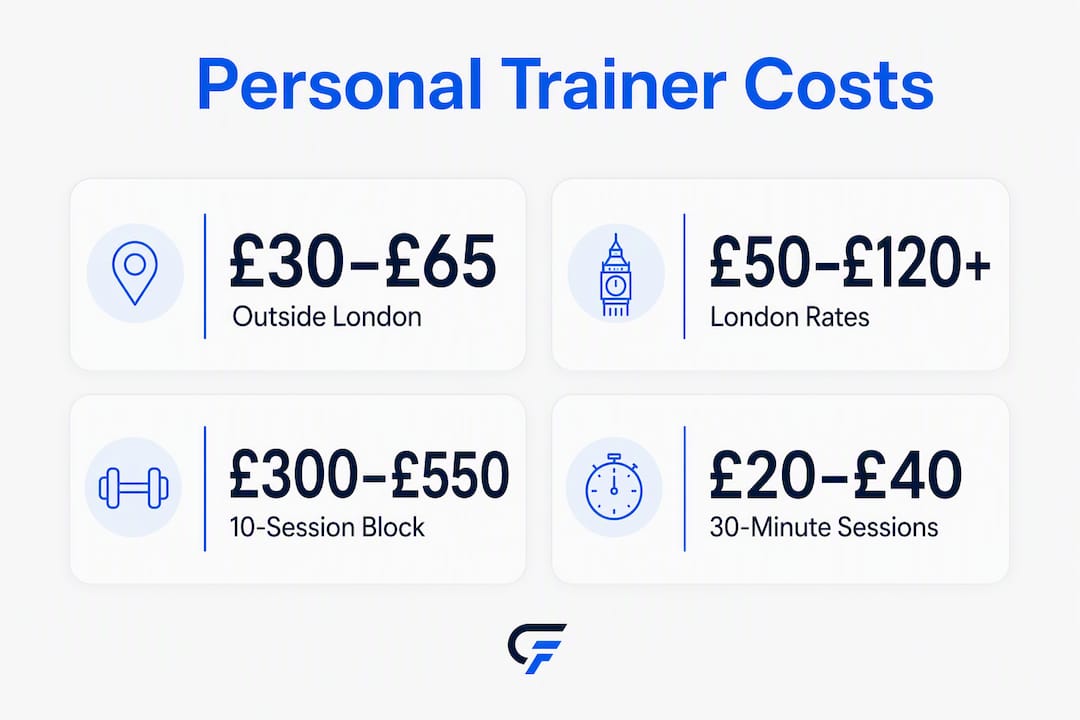
- One-to-one sessions (most UK regions): £30–£65 per hour
- One-to-one sessions (London and premium): £50–£120+, with elite specialists above £150
- Small-group personal training: £10–£35 per person per session
- Online coaching packages: £30–£200+ per month
- Block-booking savings: buying sessions in blocks of 10 or 20 typically reduces the per-session cost by 15–30%
You can compare verified trainer profiles, qualifications, and transparent pricing on Yourcoachify, the UK coach marketplace.
Table of Contents
- How much does personal trainer cost in the UK? Price ranges by format
- What drives personal training prices in the UK?
- What do you actually get at each price point?
- How to reduce costs without losing results
- How to choose the right personal trainer for your goals
- How long until you see real fitness progress?
- Where these price ranges come from
- Key takeaways
- The real cost of a personal trainer is about more than the hourly rate
- Find and book the right trainer on Yourcoachify
- Useful sources
How much does personal trainer cost in the UK? Price ranges by format
Personal training rates UK-wide vary more than most people expect. Here is a realistic breakdown, by format,, drawn from 2025–26 industry guidance.
| Format | Typical price range | Common inclusions |
|---|---|---|
| 1:1 session (most regions) | £30–£65 per hour | Programme, coaching, feedback |
| 1:1 session (London/premium) | £50–£120+ per hour | As above, plus specialist expertise |
| 10-session package | £300–£550 total | Sessions + basic programme + assessment |
| Small-group PT (per person) | lower price per session | Shared coaching, structured workout |
| Online coaching (monthly) | a range of monthly prices | Programme, check-ins, messaging |
A 10-session block is the most common entry point. At moderate rates, expect to pay between £300 and £550 for ten sessions with an assessment and a written programme included. Online coaching starts around £50 per month for a template programme with weekly check-ins and rises to £200+ for fully bespoke plans with daily messaging and nutrition support.
Block packages reduce cost meaningfully. A trainer charging £55 per session pay-as-you-go might offer the same session for £42–£47 inside a 10-session block. That saving adds up quickly over a 12-week programme.
What drives personal training prices in the UK?
Three variables account for most of the price difference you will see when comparing quotes.
Location is the biggest single driver. London and the South East command a clear premium partly because trainers face higher overheads, including studio rent, travel costs, and a higher cost of living. Outside the capital, rates in cities like Manchester, Birmingham, and Leeds tend to sit in the £35–£60 range, while rural areas can be closer to £25–£40.

Trainer experience and qualifications matter enormously. A newly certified trainer building their first client base will price competitively. An experienced coach with a decade of results, specialist certifications in rehabilitation or nutrition, and a full diary will charge accordingly.
Service complexity is the third driver. A session that includes a full movement assessment, bespoke programming, nutrition guidance, and between-session messaging costs more to deliver than a straightforward hour of coaching. That extra support is often what produces results.
Secondary factors include session length (30-minute sessions typically cost £20–£40), home visits or travel, gym commission structures, and peak-time slots.
Pro Tip: If you are consistent and can commit to a regular schedule, a block package almost always works out cheaper than pay-as-you-go. If your schedule is unpredictable, negotiate flexible rescheduling terms before you buy.
What do you actually get at each price point?
Price and value are not the same thing. Here is what different personal training rates UK clients typically receive.
Entry level (approx. £30–£45 per session)
- A structured session with a qualified trainer
- Basic programme guidance
- Limited between-session contact
- Suitable for general fitness goals with a consistent client
Mid-range (approx. £45–£80 per session)
- Full initial assessment and movement screen
- Bespoke written programme updated regularly
- Basic nutrition guidance
- Regular check-ins (typically fortnightly)
- Messaging support between sessions
A sample mid-range package: 10 sessions at £55 each, plus an initial assessment and four progress check-ins, comes to roughly £550–£600 total. That is a realistic benchmark for a solid 10-week programme outside London.
Premium (£80+ per session, London top-end £120–£150+)
- Detailed body-composition tracking
- Fully bespoke nutrition planning
- 24/7 messaging and accountability
- Specialist expertise (rehabilitation, pre/postnatal, elite performance)
- Transformation galleries and documented client outcomes
The wraparound services at premium level are what justify the higher fee. If you are managing an injury, preparing for a specific event, or need daily accountability to stay on track, those extras can make a measurable difference to your results.
How to reduce costs without losing results
Affordable personal trainers UK-wide are more accessible than many people realise. The key is choosing the right format for your goals.
| Format | Typical cost | Best for |
|---|---|---|
| Small-group PT (2–4 people) | £10–£35 per person | Motivation, social accountability |
| Semi-private (pairs) | £20–£40 per person | Shared cost, personalised attention |
| Online coaching | £50–£200+ per month | Consistency, flexibility, lower cost |
| Hybrid (online + occasional 1:1) | £80–£150+ per month | Balance of support and in-person contact |
| Community bootcamp | £5–£15 per session | General fitness, group energy |
Splitting the cost of a session with a training partner is one of the most underused tactics. Two people sharing a 1:1 session at £60 each pay £30 per person, matching the lowest end of group rates while keeping a degree of personalised attention.
Online coaching is worth serious consideration. Hybrid and online packages can deliver comparable monthly support to weekly in-person training, often at a lower total cost, particularly when you factor in travel time and gym fees.
Pro Tip: Always ask about expiry terms before buying a block. Many trainers operate strict use-windows, such as 10 sessions within 12 weeks. Missing that window means losing paid sessions, so confirm the terms in writing before you commit.
How to choose the right personal trainer for your goals
The cheapest trainer is rarely the best value. Use these criteria to evaluate any quote.
Selection checklist:
- Recognised qualification (e.g. Level 3 Personal Trainer certificate as a minimum)
- Verified reviews from real clients
- Relevant specialism for your goal (weight loss, strength, rehabilitation, pre/postnatal)
- Clear, written pricing and package terms
- Evidence of client progress (transformation galleries, measurable outcomes)
- Valid insurance and first-aid certification
Five questions to ask before you book:
- What does your initial assessment involve, and is it included in the price?
- What exactly is included in this package (sessions, programme updates, check-ins, messaging)?
- What are your cancellation, rescheduling, and package expiry terms?
- How do you measure and track my progress over time?
- Can you share examples of results from clients with similar goals to mine?
Red flags to watch for:
- No written terms or contract
- Pressure to buy a large package before any assessment
- Vague promises ("you'll see results fast") with no measurable benchmarks
- No evidence of client outcomes or qualifications
How long until you see real fitness progress?
Setting realistic expectations protects both your budget and your motivation. Timelines vary by goal.
- General fitness improvement: noticeable changes in energy and stamina within 4–6 weeks of consistent training
- Fat loss: visible changes typically take 8–12 weeks with two to three sessions per week, supported by nutrition
- Strength gains: measurable increases in 6–10 weeks with progressive overload and consistent attendance
- Postural or rehabilitation goals: 8–16 weeks depending on starting point and severity
Frequency matters as much as quality. One session per week with no supplementary training produces slower results than two sessions per week with a structured programme to follow independently. The trainer's programme is what guides your progress between sessions.
Factors that speed progress: good nutrition, adequate sleep, consistent attendance, and a programme that progresses appropriately. Factors that slow it: irregular attendance, poor recovery, and a generic programme not tailored to your starting point.
Pro Tip: A 6–12 week package is a sensible way to test compatibility with a new trainer. It is long enough to see measurable progress and short enough to change course if the fit is not right.
Where these price ranges come from
The figures in this guide reflect 2025–26 UK industry pricing guidance, drawn from aggregator data, independent pricing guides, and official government context.
Key assumptions:
- Session length of 45–60 minutes unless stated otherwise
- Ranges mix independent trainers and gym-employed trainers (gym-employed rates are often lower because the facility absorbs some overhead)
- London and South East figures carry a notable location premium above the national average
- Package savings apply to blocks of 10 or more sessions
- The current personal tax allowance is factored into trainer overheads and influences minimum viable pricing for self-employed coaches
How to adapt these figures to your area: check recent local listings and trainer profiles for the most current rates. Prices in rural areas or lower-cost regions can sit 20–30% below the national mid-range. London rates can exceed the upper end of any national guide.
"The average hourly cost of a personal trainer in the UK is between £30 and £50. However, finding out what other local personal trainers are charging for their services will give you a good idea of the going rates in your area." — Insure4Sport pricing guide
Key takeaways
Personal trainer costs in the UK range from moderate to higher rates depending on region and specialist status, with block bookings reducing per-session costs significantly.
| Point | Details |
|---|---|
| Typical UK price range | One-to-one sessions cost £30–£65 outside London; £50–£120+ in London and premium settings. |
| Block-booking savings | Buying 10 or more sessions reduces per-session cost by roughly 15–30% versus pay-as-you-go. |
| Budget-friendly formats | Small-group PT costs £10–£35 per person; online coaching starts around £50 per month. |
| Value over price | Accountability and structured programming drive results more than the hourly rate alone. |
| Find verified trainers | Yourcoachify lets you search, compare, and book verified UK personal trainers by location and specialism. |
The real cost of a personal trainer is about more than the hourly rate
Most people focus on the per-session price when comparing trainers. That is understandable, but it misses the point. The real question is: which trainer will keep you consistent, adjust your programme when it stops working, and give you the accountability to show up week after week?
A mid-range trainer at £55 per session who checks in fortnightly, updates your programme monthly, and responds to your messages will almost always deliver better results than an occasional premium session with no follow-through. Consistency and structured check-ins are what drive measurable progress, not the hourly rate. Paying more is worth it when the wraparound services genuinely improve your adherence or manage a specific injury risk. Paying more for a name or a premium location alone rarely is.
Choose the trainer whose delivery model matches your capacity to commit, not just the one with the most impressive rate card.
Find and book the right trainer on Yourcoachify
Comparing personal training rates UK-wide used to mean hours of searching, cold enquiries, and hoping the trainer's website was up to date. Yourcoachify removes that friction entirely.

Search by location, filter by specialism (weight loss, strength, rehabilitation, pre/postnatal, nutrition), and browse verified reviews, qualifications, and transformation galleries, all in one place. Every profile shows clear pricing so you can compare cost of personal training sessions side by side before you reach out. Book a single session or a package, pay as you go or commit to a block — the choice is yours.
Search verified personal trainers on Yourcoachify and find the right match for your goals and budget today.
Useful sources
- Insure4Sport: How much do personal trainers charge?
- GymGuide: Personal trainer cost UK 2026 guide
- Simply Link: PT price calculator and rates guide
- Adviita: How much to charge for personal training
- LeCoach: Personal trainer cost
- GOV.UK: Income Tax rates and Personal Allowance
- Yourcoachify: UK coach marketplace
This guide provides general pricing information only. Rates vary by location, trainer, and service level. Always confirm current pricing and terms directly with your chosen trainer.