
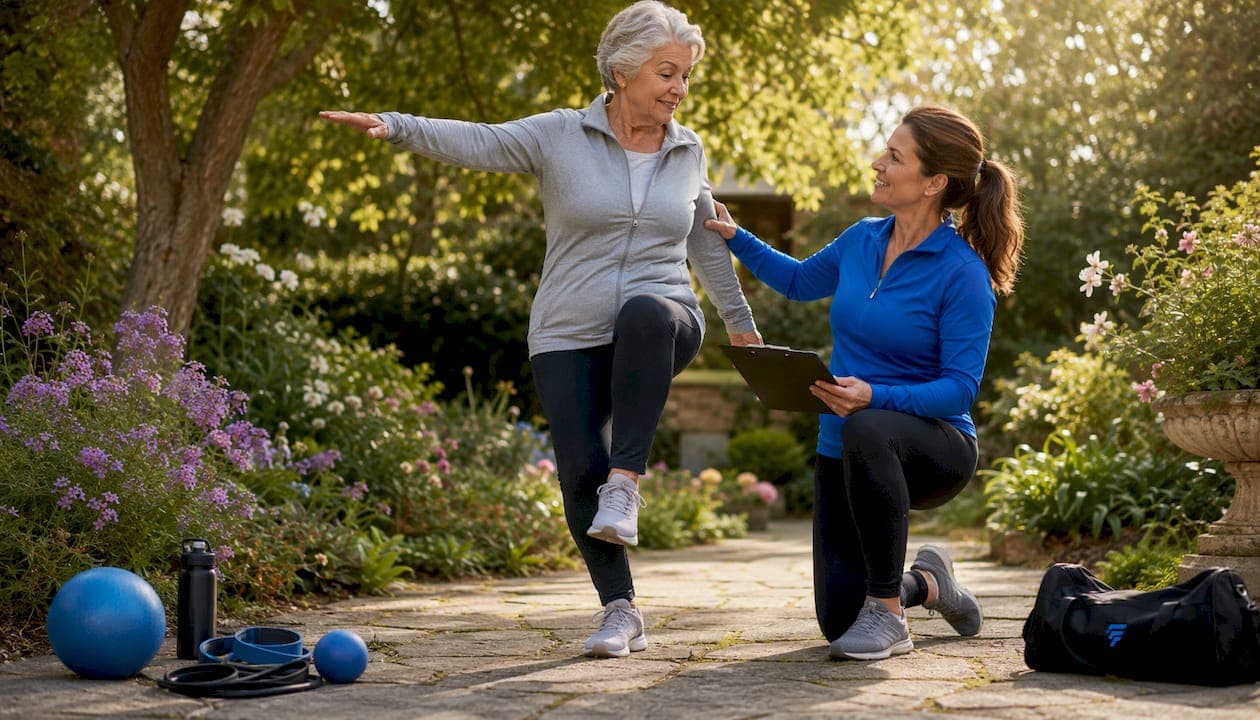
You can find and hire a UK personal trainer who specialises in older adults by prioritising senior-specific qualifications, a clinical-style initial assessment, and verified client reviews. Here is your immediate checklist before booking anyone:
- Qualifications: CIMSPA membership, Level 3 or Level 4 personal training certificate, or a recognised rehabilitation qualification
- Assessment: A proper first-session movement screen (sit-to-stand, gait, balance), not a straight workout
- Safety checks: Valid first aid certificate, public liability insurance, and a DBS check where the trainer works in your home
- Session format: Confirm whether in-home, gym-based, or online sessions suit your mobility and transport situation
- Verified reviews: Ask for references or check a platform with independently verified client feedback
- Marketplace option: Yourcoachify lets you filter UK trainers by senior specialism, check listed qualifications, and book a free consultation in minutes
Table of Contents
- Why does senior-specific personal training make such a difference?
- What actually happens in a session?
- How is a senior training programme structured over time?
- How do you choose the right trainer?
- What do personal training sessions cost in the UK?
- What are the best exercises for seniors to start with?
- How Yourcoachify helps you find a verified senior-specialist trainer
- Key takeaways
- Why specialist matching matters more than you might think
- Ready to find your senior-specialist trainer on Yourcoachify?
- Useful sources and further reading
Why does senior-specific personal training make such a difference?
General fitness programmes are built around healthy adults in their 30s and 40s. A senior fitness coach works from a completely different starting point: what does this person need to stay independent, confident, and safe in their daily life?
The practical targets are specific:
- Functional strength: Getting up from a chair, carrying shopping, climbing stairs without gripping the rail
- Joint mobility: Keeping hips, knees, and shoulders moving through a comfortable range so everyday tasks stay manageable
- Balance and fall prevention: Strength training around joints improves real-world stability more reliably than isolated balance drills alone
- Psychological confidence: Fear of movement after a wobble or injury is one of the biggest barriers to staying active. A good coach rebuilds that confidence steadily, with accountability at every session
The NHS recommends that older adults do strengthening activities at least two days per week, alongside balance and flexibility work. A specialist trainer structures every session around exactly that framework, adapted to your current ability.
What actually happens in a session?
The first session with an experienced senior trainer looks nothing like a standard gym induction. It is primarily an assessment: a structured movement screen that gives the trainer a clear baseline before any exercise is prescribed.
Standard first-session tests typically include:
- 30-second sit-to-stand: Counts how many times you can rise from a chair unaided, measuring leg strength and power
- Timed Up and Go (TUG): Stands up, walks three metres, turns, and returns, tracking gait speed and balance
- Single-leg balance (with support nearby): Assesses stability and fall risk
- Range of motion checks: Shoulder, hip, and ankle mobility
- Medication and health history review: Flags anything that affects exercise safety
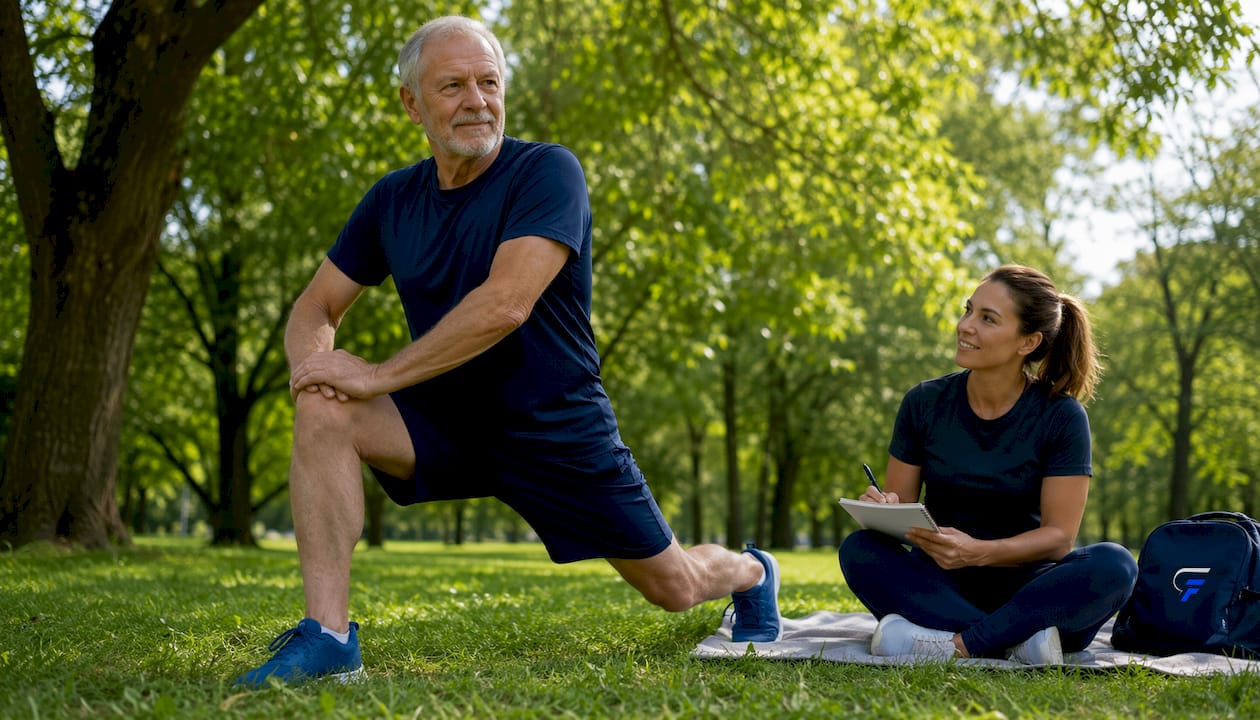
After that first session, a typical training session follows a consistent shape: a gentle warm-up, joint-friendly strength work (bodyweight or light resistance), functional balance drills, low-impact cardio, and a short cool-down with mobility work. Progress notes go into the client record after every session, and trainers working with older adults often share brief updates with a family member or carer.
Pro Tip: Before your first session, write down your current medications, any recent diagnoses or surgery, and whether you use a walking aid. Handing this to your trainer at the start saves time and helps them design a safer programme from day one.
How is a senior training programme structured over time?
A well-run programme follows a clear sequence, so you always know where you are and what comes next.
- Initial screen and movement tests (session one): Baseline measurements, health history, and functional tests as described above
- Bespoke plan (within the first week): A written programme built around your goals, conditions, and preferred session format
- Regular sessions (weeks 1–8): Typically two sessions per week, with home-based exercises to practise between visits
- Four-to-twelve-week review: Repeat the baseline tests to measure functional gains, adjust load or complexity, and set the next phase of goals
Session formats: which suits you best?
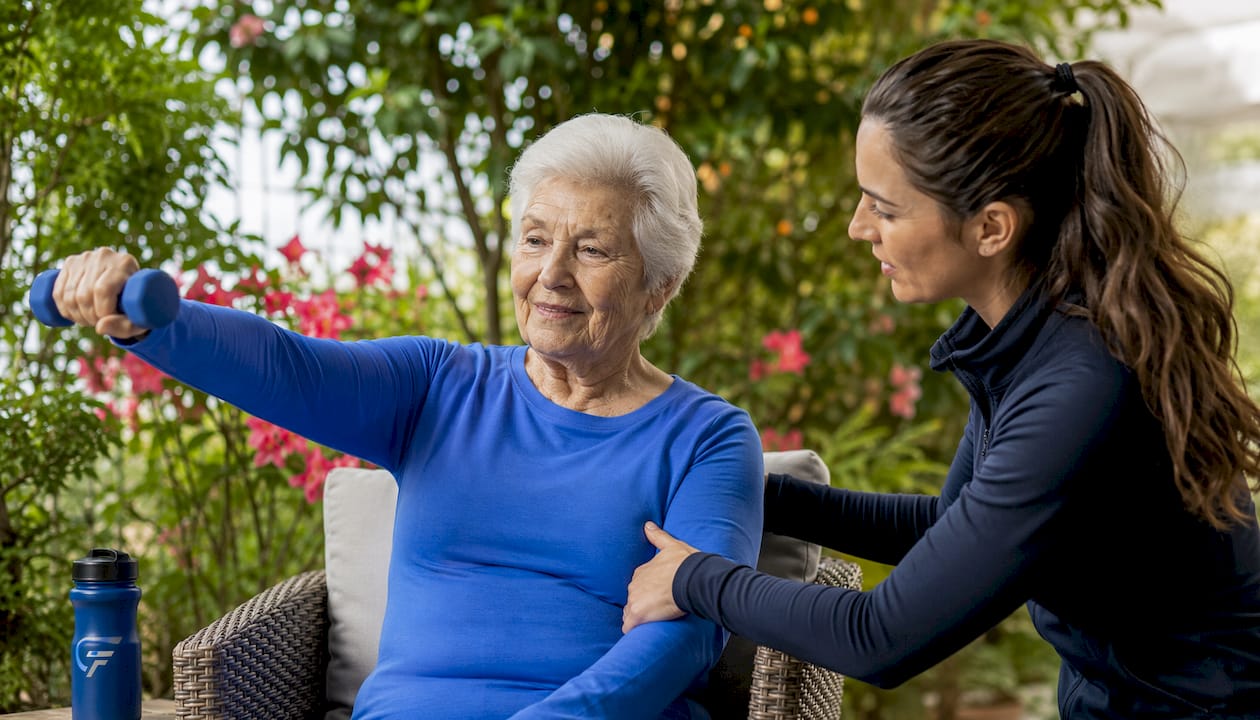
- In-home training: No travel, familiar environment, and the trainer brings equipment. Particularly good if mobility or transport is limited. Specialist trainers who visit at home often charge premium rates to cover travel and portable kit
- Gym or studio sessions: Access to a wider range of equipment; good if you enjoy getting out of the house
- Online or virtual coaching: Lower cost, flexible scheduling, and useful for follow-up sessions between in-person visits. Works well once a trainer knows you and your space
- Hybrid: Many senior trainers offer a mix, combining monthly in-home assessments with weekly virtual check-ins
Adapting for long-term conditions
Specialist trainers programme with co-morbidities in mind. For a client managing arthritis alongside hypertension, for example, the trainer adjusts load to protect inflamed joints while monitoring exertion levels to keep blood pressure safe. These adaptations are documented in the client record, and a good trainer will ask for GP or physiotherapist input whenever a new diagnosis or post-operative recovery is involved.
How do you choose the right trainer?
The right senior wellness trainer has specific credentials, a clear process, and no hesitation about answering your questions. Use this checklist.
Must-have qualifications and trust signals:
- CIMSPA membership or a recognised Level 3/4 personal training qualification
- A specialist senior fitness or rehabilitation certificate (e.g. REPS-recognised senior fitness award)
- Valid first aid certificate (within the last three years)
- Public liability insurance
- DBS check if they work in your home or with vulnerable adults
Questions to ask on the enquiry call:
- How many of your current clients are aged 60 or over?
- What does your first session look like, and which movement tests do you use?
- How do you handle a client who is on blood thinners, or who has had a recent fall?
- Can you share progress reports with my daughter/son/carer?
- Do you have verified reviews or case examples I can read?
Red flags to watch for:
- Pushes straight into high-impact exercise without any assessment
- Cannot name the qualifications they hold or show proof of insurance
- No clear way to track or report progress
- Dismisses questions about medications or medical history
Verifying experience with older adults specifically matters. Ask for before-and-after functional test results (sit-to-stand scores, TUG times) rather than just before-and-after photos. A short trial session or free consultation is a reasonable request, and most reputable trainers will offer one.
What do personal training sessions cost in the UK?
Personal training for older adults in the UK varies by format and specialism. Trainers with senior certifications and in-home capability generally charge more than standard gym-based coaches, reflecting their specialist insurance, clinical assessment skills, and travel time.
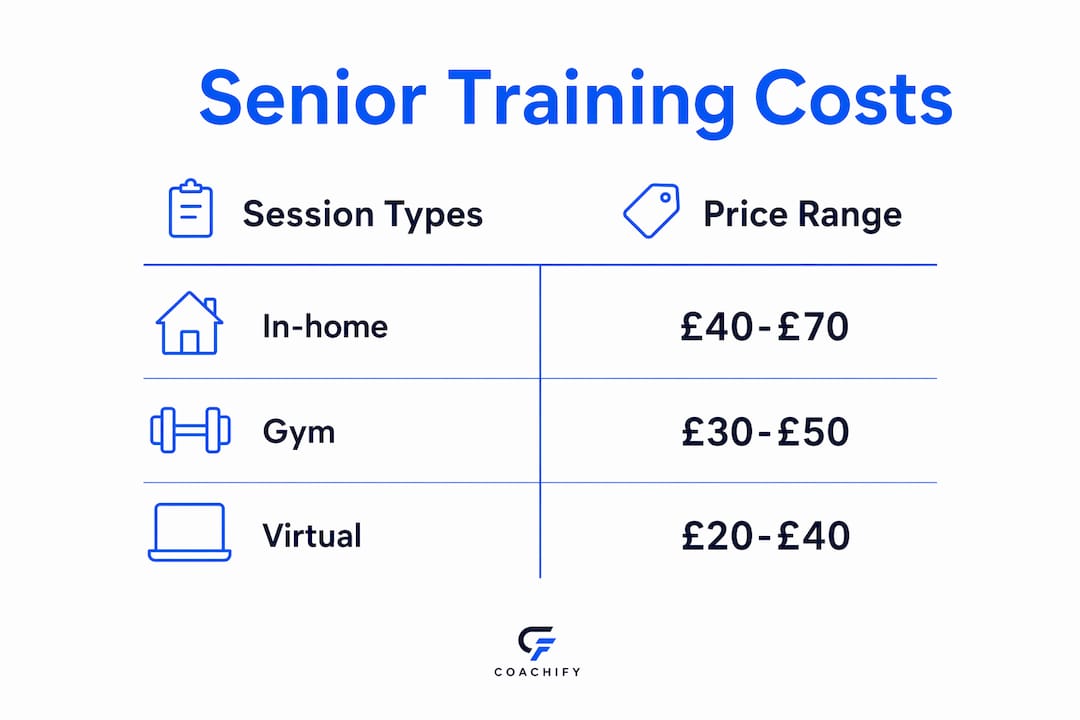
| Format | Typical UK price range | Notes |
|---|---|---|
| In-home (60 min) | — | Premium for travel and portable equipment |
| Studio or gym (60 min) | — | Lower overhead; good equipment access |
| Online / virtual (45–60 min) | — | Most affordable; suits follow-up sessions |
| Block package (10 sessions) | — | Discount vs. pay-as-you-go; varies by format |
Pricing is also offered in session length tiers, so a 30-minute check-in session costs noticeably less than a full hour. Functional gains from regular sessions, such as improved sit-to-stand scores and greater stair confidence, are typically measurable within three months of consistent training. Two sessions per week for 8–12 weeks is a sensible minimum timeline to set realistic expectations.
Cost-saving options worth asking about:
- Shorter 30–45 minute sessions for maintenance phases
- Small group sessions with one or two friends or neighbours
- Hybrid packages combining monthly in-person visits with weekly virtual sessions
- Home exercise programmes to reduce session frequency once you have built confidence
What are the best exercises for seniors to start with?
Concrete examples help you recognise good programming and have an informed conversation with any trainer you consider. The Otago Exercise Programme, a clinically validated falls-prevention protocol, combines muscle strengthening, balance retraining, and walking, and it is widely referenced by UK physiotherapists and senior trainers alike.
Joint-friendly strength:
- Chair sit-to-stand: start with arms crossed, progress to no arm support, then add a light weighted vest
- Wall push-ups: adjustable angle makes them safe for shoulder conditions
- Calf raises at a kitchen counter: builds ankle stability and lower-leg strength
Balance:
- Weight-shift side to side (holding a counter): progresses to single-leg stance with fingertip support
- Tandem stance (one foot in front of the other): held for 10 seconds, then increased duration
- Walking heel-to-toe along a line: combines gait training with balance challenge
Mobility:
- Gentle shoulder circles and cross-body reaches for upper-body range of motion
- Seated hip flexor stretch: important for anyone who sits for long periods
- Ankle circles: often overlooked but critical for gait stability
Safe progression follows a simple rule: more repetitions first, then reduce support, then add light load. A trainer should modify any exercise immediately if you report sharp pain, dizziness, or unusual breathlessness.
Pro Tip: Pair balance practice with a daily task you already do. Practise standing on one leg (with a hand near the counter) while the kettle boils, or carry a light shopping bag on short walks to build functional carrying strength. These small habits add up quickly.
How Yourcoachify helps you find a verified senior-specialist trainer
Yourcoachify is a UK-wide coach marketplace built to take the guesswork out of finding the right trainer. For older adults and their carers, the platform offers several features that matter most:
- Specialist filters: Search by senior fitness, falls prevention, post-operative recovery, or long-term condition management to surface only relevant profiles
- Verified qualifications and reviews: Every listed trainer's credentials and client reviews are displayed on their profile, so you can check CIMSPA membership and Level evidence before making contact
- Transformation galleries: Real client progress examples give you a realistic picture of what to expect
- Caregiver account features: Family members or carers can follow session updates and progress reports, keeping everyone informed and reassured
- Free consultation option: Most trainers on the platform offer an initial enquiry call or trial session, so you can ask your checklist questions before committing
To get started, visit Yourcoachify, use the senior specialism filter, and browse verified profiles in your area. You can message a trainer directly, request a free consultation, and check their qualifications all in one place.
Key takeaways
A specialist personal trainer for seniors focuses on functional strength, balance, and fall prevention, and the right one holds verified UK qualifications, conducts a clinical-style assessment at the first session, and adapts every plan to your specific health conditions.
| Point | Details |
|---|---|
| Request a movement assessment | A proper first session includes sit-to-stand, TUG, and balance tests, not a straight workout. |
| Check CIMSPA or Level 3/4 evidence | Ask for proof of qualifications, insurance, and a DBS check before any home visit. |
| Set an 8–12 week goal timeline | Functional gains such as improved stair confidence are typically measurable within three months of consistent training. |
| Use verified reviews and case examples | Ask for before-and-after functional test results, not just photos, to verify real senior experience. |
| Find a trainer via Yourcoachify | Yourcoachify's specialist filters and verified profiles make it straightforward to find and book a senior-specialist trainer in the UK. |
Why specialist matching matters more than you might think
The conventional advice is simply to "find a qualified trainer." That is necessary but not sufficient. A Level 3 certificate covers the basics of exercise programming, but it does not automatically prepare a trainer to work with someone managing osteoporosis, a recent hip replacement, and mild hypertension simultaneously. Those three conditions interact in ways that require specific knowledge: load management for bone density, range-of-motion limits post-surgery, and exertion monitoring for blood pressure.
What older adults and their carers should actually be asking is not just "are you qualified?" but "have you worked with someone in my exact situation, and can you show me the outcomes?" That shift in questioning changes everything. It moves the conversation from credentials on paper to demonstrated, real-world competence.
Platforms that display verified reviews and functional outcome examples, rather than just certificates, make that distinction visible before you ever speak to a trainer. That transparency is what separates a confident, informed choice from a hopeful one.
Ready to find your senior-specialist trainer on Yourcoachify?
Searching for the right personal training for older adults used to mean trawling through generic gym websites and hoping someone had senior experience. Yourcoachify changes that. The platform's specialist filters surface trainers with verified senior fitness qualifications, real client reviews, and the session formats, whether in-home, studio, or online, that suit your situation.

Carers can follow progress through account update features, and most trainers listed on the platform offer a free initial consultation so you can ask every question on your checklist before committing. Verified profiles mean you see qualifications, reviews, and transformation galleries in one place, with no chasing for proof.
Search senior-specialist trainers on Yourcoachify today and book your free consultation.
Useful sources and further reading
- NHS physical activity guidelines for older adults: The UK's official guidance on how much and what type of exercise older adults should aim for each week.
- MSD Manual: exercise in older adults: Clear clinical explanation of strength, balance, and flexibility training principles for older people, including safety considerations.
- The Otago Exercise Programme: A clinically validated home-based programme combining muscle strengthening, balance retraining, and walking, widely used by UK physiotherapists.
- NCOA: exercise programmes for older adults: Evidence-based programme directory from the National Council on Ageing, useful for understanding structured group and individual options.
- Yourcoachify UK coach marketplace: Search, filter, and book verified senior-specialist personal trainers across the UK, with caregiver account options and progress tracking.
This article is general information, not medical or professional advice. Always confirm exercise suitability with your GP or a qualified health professional before starting a new programme, particularly if you have an existing health condition.