
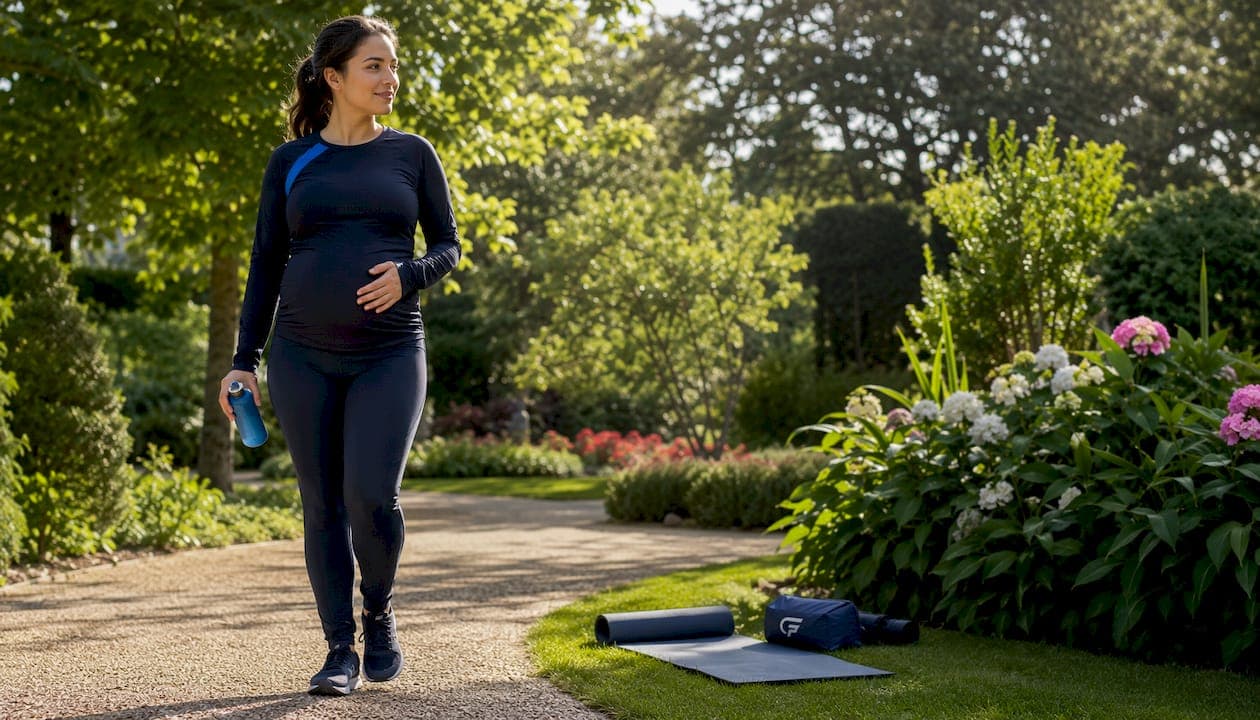
Gentle movement is appropriate from day one after a caesarean section. The key rule is simple: let your symptoms guide every step forward, not the calendar. High-impact activity such as running, jumping, or heavy resistance training usually waits until at least 6–12 weeks post-surgery, and often longer depending on how your recovery progresses.
Your immediate TL;DR:
- Start today (in hospital): short walks to the end of the ward, ankle pumps while lying down, and slow diaphragmatic breathing.
- Begin pelvic floor activation once your catheter is removed and you feel ready, even if that is day one or two.
- Avoid heavy lifting (anything heavier than your baby), sit-ups, crunches, or any exercise that causes doming or pulling at your incision.
- Stop immediately if you notice increased bleeding, sharp wound pain, abdominal doming, or any new leaking of urine or bowel. Seek clinical review before continuing.
This plan follows NHS guidance and the advice of pelvic-health physiotherapists across the UK. Every progression step is symptom-based, not date-based.
Table of Contents
- What to do in the first days and the first week after your C-section
- Pelvic floor training after a C-section: when to start and how to do it
- How to reconnect your core safely after surgery
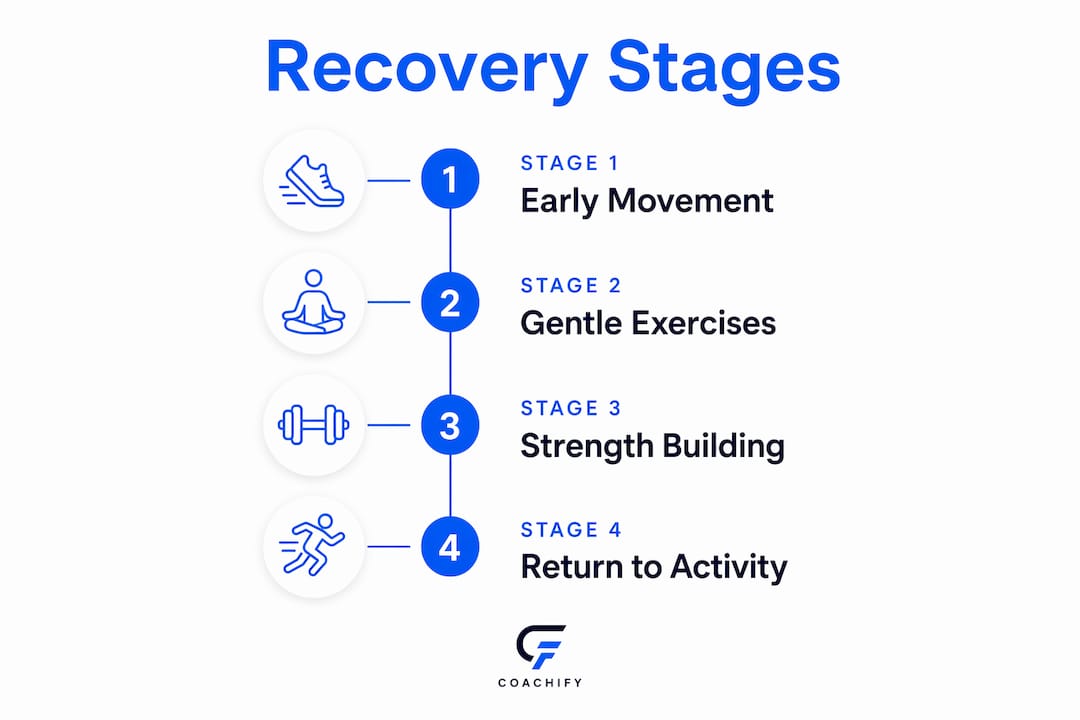
- A practical staged plan: what to expect at each stage of recovery
- When is it safe to return to running, jumping, and heavy lifting?
- Symptoms that need GP or physiotherapy review
- Daily life, breastfeeding, energy, and nutrition while rebuilding fitness
- What clinicians actually say about returning to exercise after a C-section
- Key takeaways
- The part of recovery no one talks about enough
- Find a postnatal specialist who understands your recovery
- Useful UK sources and further reading
What to do in the first days and the first week after your C-section
The priority in those first 48–72 hours is not exercise. It is safe movement, circulation, and protecting your wound while your body begins to heal.
Moving safely in hospital
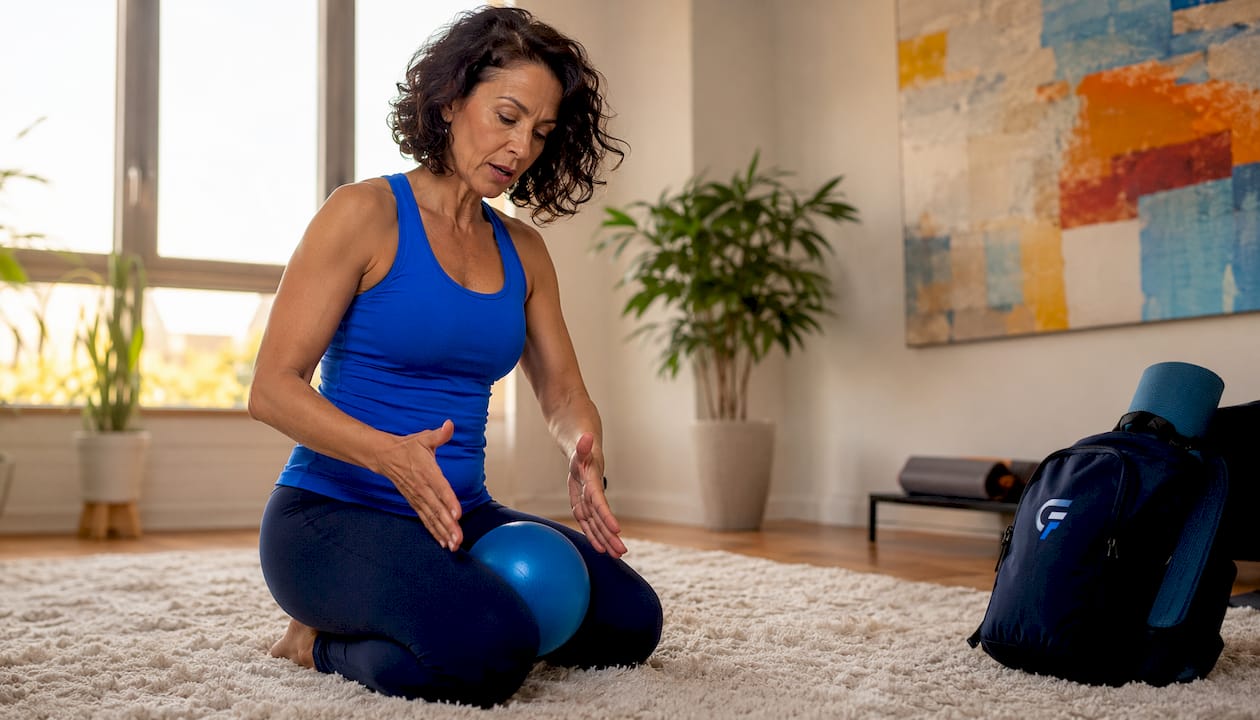
Getting out of bed for the first time feels daunting, but short, frequent movement reduces the risk of blood clots after abdominal surgery. Start with ankle pumps: lying flat, flex and point your feet briskly for 30 seconds every hour. When you are ready to sit up, use the log-roll technique: bend your knees, roll onto your side as one unit, and push up with your arms rather than pulling through your abdomen.
The log-roll technique matters more than it sounds. Pulling straight up from lying flat loads the incision and the superficial abdominal muscles before they are ready. Using your arms to push up instead protects the wound and avoids unnecessary strain on the deeper core.
Once you are upright, aim for short walks: to the bathroom, to the end of the corridor, and back. Frequency beats distance at this stage. Three or four short walks spread across the day do more for your circulation and recovery than one longer attempt.
At home in week one
Keep lifts to a minimum. The general guidance is to avoid lifting anything heavier than your baby for the first few weeks. When you do lift, bend at the knees, hold the load close to your body, and exhale as you rise. Avoid carrying a car seat, a heavy changing bag, or a pram up stairs alone.
Pro Tip: Support your incision with a folded pillow or a rolled towel when you cough, sneeze, or laugh. Press it gently against your lower abdomen before the cough comes. This simple habit reduces pain and protects the wound during those sudden pressure spikes.
Observe your wound daily. Mild bruising and swelling are normal. Contact your GP or midwife if you notice increasing redness spreading from the wound, any green or foul-smelling discharge, or a fever above 38°C.
Pelvic floor training after a C-section: when to start and how to do it
Many women assume pelvic floor work is only for vaginal births. That is one of the most common misconceptions in postnatal recovery. A caesarean section still places significant load on the pelvic floor during pregnancy, and the pelvic floor muscles need attention regardless of how your baby was born.
You can begin pelvic floor muscle training as soon as your catheter is removed and you feel ready. For most women, that is within 24–48 hours of surgery.
How to do it correctly
Sit or lie comfortably. Breathe in gently, then as you breathe out, imagine you are trying to stop the flow of urine and hold back wind at the same time. That is a pelvic floor contraction. Do not hold your breath, clench your buttocks, or tighten your thighs. The movement is internal and subtle.
There are two types of contraction to practise:
- Long squeezes: Hold the contraction for up to 10 seconds, then fully release. Rest for the same amount of time before repeating.
- Short quick squeezes: Contract and release quickly, aiming for up to 10 repetitions in a row.
| Exercise type | Hold / reps | Sets per day | Notes |
|---|---|---|---|
| Long squeeze | Up to 10 seconds | 3 | Fully release between each hold |
| Short quick squeeze | Up to 10 reps | 3 | Brisk contract-and-release rhythm |
Build gradually. If 10 seconds feels too much in week one, start with 4–5 seconds and add a second each day. The goal is consistent daily practice, not perfection from the outset.
Stop and seek assessment from a women's health physiotherapist if you notice worsening urinary leakage, a feeling of heaviness or pressure in your pelvis, pain during contractions, or any sensation that something is "falling down." These are signs that need professional review, not more repetitions.
How to reconnect your core safely after surgery
The core after a caesarean section is not simply "weak." The muscles have been cut through and sutured. The nerve supply to the lower abdominal wall is disrupted. The first goal is not strength. It is reconnection.
Start with your breath
Diaphragmatic breathing is the foundation of core reconnection after surgery. Lie on your back with your knees bent. Place one hand on your chest and one on your belly. Breathe in slowly through your nose, letting your belly rise while your chest stays relatively still. Breathe out through pursed lips, feeling your belly gently fall. Practise this for 5–10 breaths, two or three times a day.
This is not a passive exercise. Diaphragmatic breathing restores intra-abdominal pressure control, which is the foundation for every other core exercise you will do later.
Pro Tip: Pair your breath with gentle transverse abdominis (TA) activation. As you breathe out, draw your lower belly gently inward and upward, as though you are trying to bring your hip bones slightly together. Hold for 5 seconds, then fully release. This is your starting point for all abdominal exercises after surgery.
Safe early exercises
Once diaphragmatic breathing feels comfortable, usually within the first week, you can add:
- Supine TA activation: As above, breath-driven lower belly draw with full release.
- Pelvic tilts: Lying on your back, knees bent, gently flatten your lower back into the floor by tilting your pelvis. Hold for 5 seconds and release.
- Heel slides: From the same position, slowly slide one heel along the floor until your leg is straight, then draw it back. Alternate sides. Keep your lower back still throughout.
Modify any exercise that causes pulling at the wound, doming of the abdomen, or breath-holding. If you see a ridge or cone shape appearing along the midline of your belly during an exercise, that is doming. Stop the movement and return to an easier version.
Checking for abdominal separation (diastasis recti)
Diastasis recti, a widening of the gap between the two sides of the rectus abdominis, is common after pregnancy. To check: lie on your back, knees bent. Place your fingertips horizontally across your midline just above your navel. Slowly lift only your head and shoulders. Feel for a gap or a soft, unsupported area under your fingers. A gap of more than two finger-widths, or a gap that feels deep and unsupported, warrants assessment by a pelvic-health physiotherapist before you progress to loaded abdominal work.
Premature heavy abdominal loading can worsen doming and pelvic floor symptoms in some women. Progress from isometric breath-driven work to loaded functional movements, and only then to resisted or rotational exercises, guided by how your body responds rather than by a fixed date.
A practical staged plan: what to expect at each stage of recovery
Recovery after a caesarean section does not follow a single schedule. What matters is where you are symptomatically, not how many weeks have passed. That said, a staged framework gives you a realistic sense of what is appropriate at each phase.
| Stage | Timeframe | Focus | Avoid |
|---|---|---|---|
| Stage 1 | 0–2 weeks | Walking, ankle pumps, diaphragmatic breathing, pelvic floor activation | Lifting, sit-ups, any loaded core work |
| Stage 2 | 2–6 weeks | Gentle mobility, heel slides, pelvic tilts, progressive walking | Impact, running, heavy resistance, over-stretching |
| Stage 3 | 6–12+ weeks | Functional strength, bodyweight squats, posture work, progressive load | High-impact (running, jumping) until cleared |
| Beyond 12 weeks | Ongoing | Return to sport, running, heavier resistance — with individual assessment | Skipping readiness checks before progressing |
Example sessions by stage
Stage 1 (0–2 weeks): A 5-minute walk at a comfortable pace, twice daily. Pelvic floor exercises three times a day. Diaphragmatic breathing for 5 minutes before sleep.
Stage 2 (2–6 weeks): A 15–20 minute walk at a gentle pace. Heel slides (10 each side), pelvic tilts (10 reps), and supine TA activation. Pelvic floor exercises daily. Gentle hip flexor stretches if comfortable.
Stage 3 (6–12+ weeks): After your 6–8 week postnatal check with your GP, you can gradually increase exercise if you are symptom-free. Introduce bodyweight squats, glute bridges, and wall push-ups. Aim for sessions of 25–35 minutes, three days a week, building load slowly.
The 2025 Canadian Guideline, referenced in postnatal physiotherapy practice, encourages building towards 120 minutes per week of moderate-to-vigorous activity spread over four or more days once you are ready. That is a long-term goal, not a week-six target.
- Listen to your body after every session. Increased bleeding, wound pain, or new leaking are signs to scale back.
- Rest days are part of the programme, not a failure.
- Sleep deprivation affects your readiness to exercise. On days when you have had very little sleep, a short walk is enough.
When is it safe to return to running, jumping, and heavy lifting?
Running and high-impact exercise place significant load on the pelvic floor and the abdominal wall. Returning too soon is one of the most common mistakes in postnatal recovery, and the consequences, including prolapse symptoms, persistent leaking, and wound complications, can take months to resolve.
Most women are not ready for running or jumping until at least 12 weeks post-surgery, and many need longer. Medical clearance at 6 weeks is a common milestone, but that appointment is not a green light for high-impact work. It is a check that your wound has healed and your general health is stable.
Readiness checklist before returning to impact
Before you attempt running, jumping, or heavy resistance training, you should be able to:
- Walk briskly for 30 minutes without pain, leaking, or pelvic heaviness.
- Perform 10 single-leg calf raises on each side without leaking or discomfort.
- Complete 10 controlled single-leg squats on each side with good balance and no symptoms.
- Jog on the spot for 1 minute without leaking, pain, or doming.
If any of these tests produce symptoms, your body is telling you it needs more time. That is not a setback. It is useful information.
How to progress once you pass the readiness checks
Change only one training variable at a time: volume, intensity, or speed. If you increase your running distance one week, keep pace and frequency the same. If a change produces symptoms, you know exactly what caused them and can adjust accordingly.
A sample run progression might look like: walk 1 minute, jog 1 minute, repeated for 20 minutes. Once that is symptom-free across three sessions, extend the jog intervals. Do not rush the walk-to-run ratio.
Pro Tip: A single session with a women's health physiotherapist before you return to running is one of the most efficient investments you can make. They can assess your pelvic floor strength, check for diastasis, and give you a personalised return-to-run plan rather than a generic one.
Symptoms that need GP or physiotherapy review
Knowing when to seek help is as important as knowing what exercises to do. Some symptoms are urgent. Others need professional assessment but are not emergencies.
Seek urgent medical attention (GP or A&E) if you notice:
- Fever above 38°C.
- Increasing redness, warmth, or swelling spreading from the wound.
- Green, yellow, or foul-smelling wound discharge.
- Sudden severe abdominal pain or a feeling that the wound has opened.
- Breathlessness, chest pain, or a swollen, painful calf (possible clot).
See a women's health physiotherapist if you experience:
- New or worsening urinary leakage, urgency, or difficulty emptying your bladder.
- Any leaking of wind or stool.
- A feeling of heaviness, dragging, or pressure in your pelvis.
- Persistent abdominal doming during everyday movements.
- Ongoing wound pain, numbness, or tightness that limits your movement.
- Pain during sex after you have been cleared to resume it.
How to prepare for your appointment
Note when your symptoms began, what makes them better or worse, and whether they have changed since surgery. If your wound is causing concern, a photograph taken in good light can help your clinician assess it remotely. In the UK, you can ask your GP for a referral to NHS women's health physiotherapy, or search for a private pelvic-health physiotherapist through the Chartered Society of Physiotherapy's directory.
Daily life, breastfeeding, energy, and nutrition while rebuilding fitness
Recovery does not happen only during exercise sessions. How you move, eat, and rest throughout the day shapes how quickly your body heals.
Practical daily adjustments
Avoid carrying anything heavy on one side of your body, including a changing bag slung over one shoulder. Distribute weight evenly, use a pram rather than carrying your baby for long distances, and ask for help with stairs and heavy loads in the first few weeks. When lifting your baby from a cot, lower the side if possible, bring them close to your chest before standing, and use your legs rather than your back.
Posture matters more than most women realise after a caesarean section. The tendency to hunch forward to protect the wound can create lasting tension in the upper back and neck. Consciously lengthen your spine when sitting to feed, use a feeding pillow to bring your baby to breast height, and take short breaks to roll your shoulders back and breathe deeply.
Breastfeeding and the incision
Feeding positions that keep your baby's weight off the incision are worth experimenting with early on. The rugby hold (baby tucked under your arm, feet behind you) and side-lying feeding both reduce direct pressure on the lower abdomen. Stay well hydrated: breastfeeding increases your fluid requirements, and dehydration slows tissue repair.
Pro Tip: Your caloric needs are higher when breastfeeding than they were during pregnancy. This is not the time for a calorie deficit. Focus on nutrient-dense foods: lean protein (chicken, fish, eggs, lentils), colourful vegetables, whole grains, and healthy fats. Protein in particular supports tissue repair after surgery.
Sleep, energy, and when to skip a session
Sleep deprivation directly reduces exercise readiness and increases injury risk. If you have had fewer than four hours of sleep, skip the formal session and rest instead. A short, gentle walk is always appropriate. Pushing through exhaustion to complete a workout is counterproductive at this stage of recovery.
Scar massage, once your wound is fully closed (usually around 6–8 weeks), can reduce tightness and improve the mobility of the tissue around the incision. Use a small amount of oil or cream, and with two fingers, gently move the scar in small circles and side-to-side motions. Scar mobility work is widely recommended by pelvic-health physiotherapists to support core re-engagement and reduce the pulling sensation that can limit movement.
What clinicians actually say about returning to exercise after a C-section
The most persistent myth in postnatal fitness is that the six-week check marks the start of normal exercise. It does not. That appointment confirms wound healing and general postnatal health. It is not a functional assessment of your pelvic floor, your core strength, or your readiness for impact.
Clinicians recommend prioritising functional markers over calendar dates: no pain, no leaking, no abdominal doming, and controlled single-leg strength. A woman who is symptom-free and passes objective readiness tests at 10 weeks is in a better position to return to running than one who is still leaking at 14 weeks, regardless of the date.
The "bounce-back" narrative, the pressure to look and perform as you did before pregnancy as quickly as possible, is one of the most damaging influences on postnatal recovery. It drives women to return to high-load abdominal work before the incision has fully healed, to run before their pelvic floor is ready, and to ignore symptoms that warrant clinical review.
Joint and ligament laxity persists for months after birth due to the hormone relaxin, which increases injury risk from over-stretching and twisting. This is why low-impact, controlled movements are not just a conservative choice in the early weeks. They are the clinically appropriate choice.
Pro Tip: When you do return to strength training, change only one variable at a time: volume, intensity, or speed. If you increase the weight you are lifting, keep the number of sets and reps the same. If symptoms appear, you will know exactly what triggered them.
A physiotherapy assessment before returning to higher loads is not a luxury. It is the most reliable way to know whether your pelvic floor and core are genuinely ready, rather than guessing based on how you feel on a good day.
Key takeaways
Safe, staged post-C-section exercise begins with gentle movement from day one and progresses only when symptoms allow, not when the calendar says so.
| Point | Details |
|---|---|
| Start moving early | Walking and ankle pumps from day one reduce the risk of blood clots and support circulation without loading the incision. |
| Pelvic floor daily | Begin pelvic floor activation once your catheter is removed; aim for three sets of long holds (up to 10 seconds) and short squeezes (up to 10 repetitions) every day. |
| Breath before load | Diaphragmatic breathing and transverse abdominis activation come before any loaded core or abdominal exercise. |
| Symptoms guide progression | No pain, no leaking, and no doming are the markers to watch, not the number of weeks since surgery. |
| Yourcoachify for guided support | Search Yourcoachify for verified postnatal and pelvic-health specialists who can build a personalised recovery programme for you. |
The part of recovery no one talks about enough
The physical side of returning to exercise after a caesarean section is well documented. The mental side is not.
Many women feel frustrated that their bodies do not respond the way they expect. They compare their recovery to others, feel pressure to "get back to normal," and interpret a slow week as failure. That frustration is understandable, and it is also one of the biggest obstacles to a safe recovery.
What actually works is a "grace over grind" approach: consistent, small efforts that respect where your body is today rather than where you want it to be next month. The women who recover most fully are not the ones who push hardest in the first six weeks. They are the ones who build a solid foundation and trust the process.
If you are unsure whether a symptom is normal, get it assessed. If you feel ready to progress but are not sure how, work with a qualified postnatal trainer or pelvic-health physiotherapist. Guessing is not a strategy when you are recovering from major abdominal surgery. Specialist guidance, whether in person or online, gives you a programme built around your body, your timeline, and your goals.
Find a postnatal specialist who understands your recovery
Recovering from a caesarean section is not something you need to figure out alone. The clearest path to safe, confident progress is working with a qualified professional who specialises in postnatal and pelvic-health fitness.
Yourcoachify is the UK's coach marketplace built for exactly this. Use the search filters to find verified postnatal personal trainers and pelvic-health specialists near you, whether that is in a gym, a studio, or online from home. Every coach profile includes verified qualifications, client reviews, and session details so you can make an informed choice before you book.
When choosing a postnatal coach or physiotherapist, look for:
- A qualification in pre- and postnatal fitness or women's health physiotherapy.
- Experience working with post-surgical clients specifically.
- A willingness to work alongside your GP or midwife team.
- A first session focused on assessment, not just exercise.
Your recovery deserves proper support. Find a postnatal specialist on Yourcoachify today and take the next step with confidence.
Useful UK sources and further reading
These are the most authoritative UK resources for post-caesarean recovery guidance. All are published by NHS trusts or recognised health charities.
- NHS: Caesarean section recovery — NHS.uk overview of what to expect in the weeks after a caesarean, including wound care, activity, and when to seek help.
- Tommy's: When and how to exercise after a C-section — Practical, evidence-based guidance from the UK's leading pregnancy charity, covering pelvic floor exercises, staged return to activity, and ligament laxity.
- NHS: Your post-pregnancy body — NHS guidance on postnatal recovery, including exercise, mental health, and when to contact your GP.
- Walsall Healthcare NHS Trust: Following your caesarean section birth — A patient leaflet covering early exercises, wound care, and returning to activity after a caesarean.
- Oxford University Hospitals NHS: Returning to exercise and sport after childbirth — Detailed physiotherapy guidance on postnatal exercise progression, including readiness checks and return-to-sport criteria.
- Manchester University NHS Foundation Trust: Returning to exercise in the postnatal period — Staged postnatal exercise guidance from a major NHS trust, with practical advice for the first 12 weeks and beyond.
This article is general information, not medical or physiotherapy advice. Always confirm your individual recovery plan with your GP, midwife, or a qualified pelvic-health physiotherapist before progressing your exercise.