
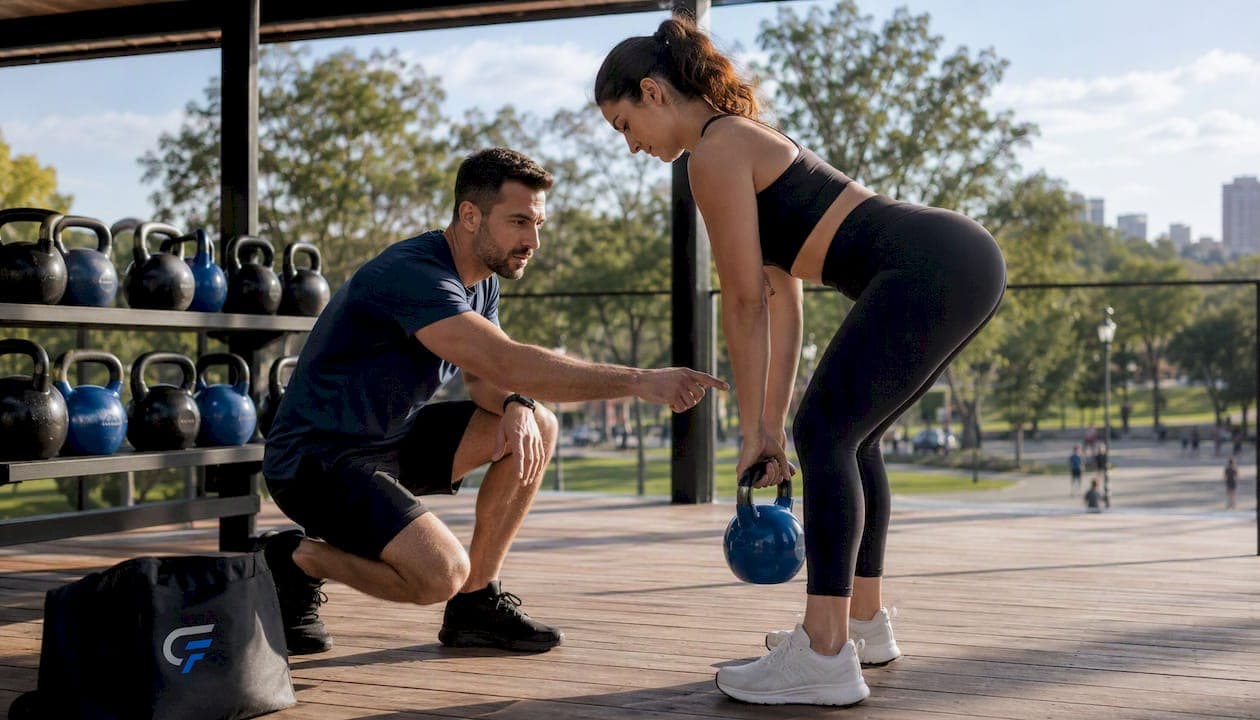
The fastest, safest way to hire a one-to-one kettlebell personal trainer in the UK is to search Yourcoachify, filter by kettlebell specialty and your location, then book an introductory session with a coach who lists verifiable credentials. Prioritise coaches holding StrongFirst SFG, RKC, or IKSFA certifications, alongside CIMSPA recognition and a Level 3 PT qualification. Verified profiles, real client reviews, and a clear session process make this route considerably lower risk than searching ad hoc.
Here is what to do right now:
- Search Yourcoachify using "kettlebell" plus your town or postcode, then filter by 1:1 availability and certification type.
- Shortlist coaches whose profiles show verified qualifications, client reviews, and transformation galleries — all of which increase your confidence before you commit.
- Book an intro session rather than a full package immediately; reputable coaches offer an assessment or trial session so you can judge fit before paying for a block.
- Prioritise credentials: StrongFirst SFG I is widely regarded as a gold-standard kettlebell instructor certification focused on strength and safe mechanics.
Table of Contents
- How do you choose the right kettlebell personal trainer for one-to-one coaching?
- What does a one-to-one kettlebell session look like from start to ongoing coaching?
- Which qualifications and safety checks matter for kettlebell coaches in the UK?
- Online, in-person, or hybrid: which kettlebell coaching format suits you?
- Is kettlebell training actually effective, and what coaching mistakes undermine it?
- Key takeaways
- What good kettlebell coaching actually feels like
- Yourcoachify connects you with certified kettlebell coaches across the UK
- Useful sources and further reading
How do you choose the right kettlebell personal trainer for one-to-one coaching?
The most important thing to check is not how many bells a coach owns. It is whether they can explain a clear assessment, technique, and progressions sequence before you lift anything heavy.
Core selection criteria
Start with coaching methodology. Hardstyle and Sport Style produce different adaptations: Hardstyle (the StrongFirst and RKC approach) emphasises tension and explosive power, making it well suited to strength and conditioning goals. Sport Style (Girevoy) focuses on efficiency and high-repetition endurance for competition. If your goal is general strength or fat loss, a Hardstyle-focused coach is usually the better starting point. If you are interested in kettlebell sport, look for IKSFA or Russian Girevoy Sport Institute credentials alongside Hardstyle experience.
Verifiable certifications matter because coaching errors often stem from prioritising bell weight over biomechanics. A coach who cannot explain wrist alignment in the rack position or why the hip hinge drives the swing is a coach who learned by watching videos, not by studying under a certified educator. Ask directly: "What certification do you hold, and can you share the course details?"
Experience with your specific goal is the third filter. A coach who specialises in post-rehabilitation movement may not be the right fit for someone chasing a 32 kg swing. Ask for examples of clients with similar starting points.
Red flags to watch for
- No verifiable credentials or vague answers when you ask for certification numbers.
- Pushing you to lift heavy in the first session before any movement screening.
- No progression plan beyond "we will see how you get on."
- No mention of injury history, contraindications, or movement quality checks.
- Unwillingness to offer a trial or introductory session.
What to ask in a discovery call
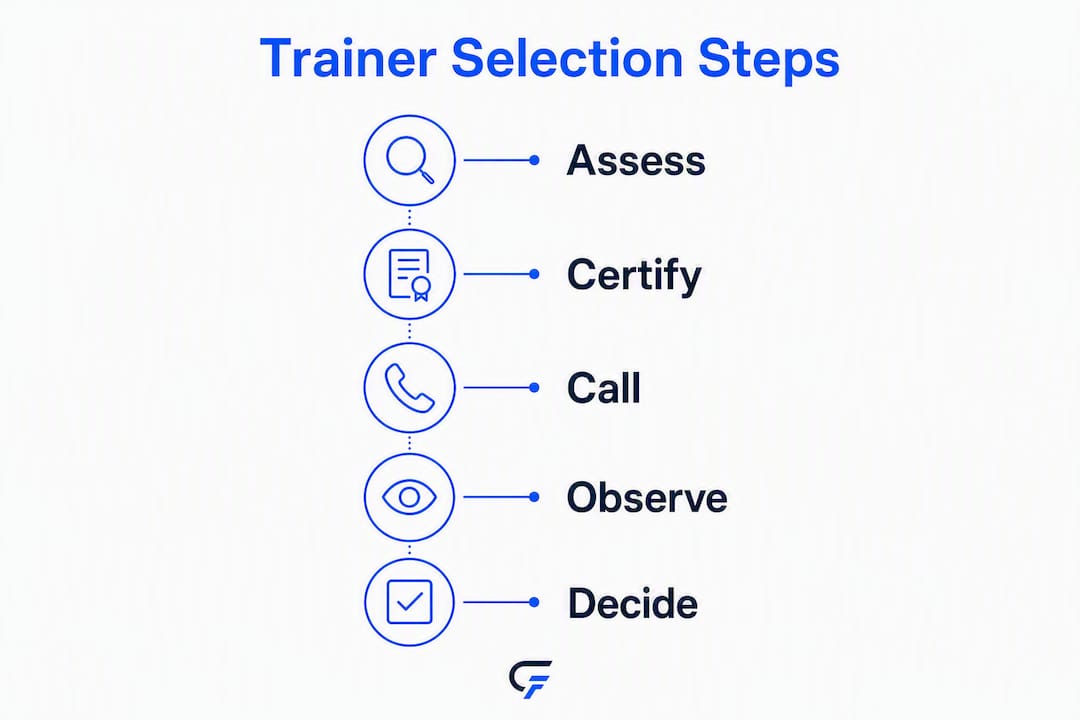
Ask about their certifications and how those apply to your goals. Ask for a sample session structure. Find out how often they reassess programming and what the cancellation policy looks like. Pricing in the UK typically comes in four shapes: single sessions, short packages of four to six sessions, monthly blocks, and pay-as-you-go online options. Compare value by looking at session length, the coach's experience level, and whether a written programme is included.
Pro Tip: Ask every prospective coach to walk you through their assessment process before you discuss pricing. A coach who leads with the assessment is almost always more trustworthy than one who leads with the package deal.
What does a one-to-one kettlebell session look like from start to ongoing coaching?
Knowing what a reputable coach actually does in the first few weeks helps you spot the ones who are cutting corners.
First contact and pre-screening
Before your first session, expect a short health and movement history questionnaire and a consent form. This is standard practice, not bureaucracy. It tells the coach about previous injuries, current medications, and any contraindications that would change how they programme your sessions.
The initial assessment
A good kettlebell coach will run you through movement screens covering the hip hinge, squat pattern, and shoulder mobility before you touch a bell. These are not tests you pass or fail. They are information-gathering tools that let the coach design a programme that fits your body, not a generic template. Baseline tests might include a simple bodyweight hinge, a goblet squat hold, and a shoulder rotation check.
"Clients often underappreciate the value of an initial movement assessment. Coaches who prioritise screening reduce injury risk and accelerate technique acquisition significantly." — KettlebellsWorkouts
Technique coaching and progressions
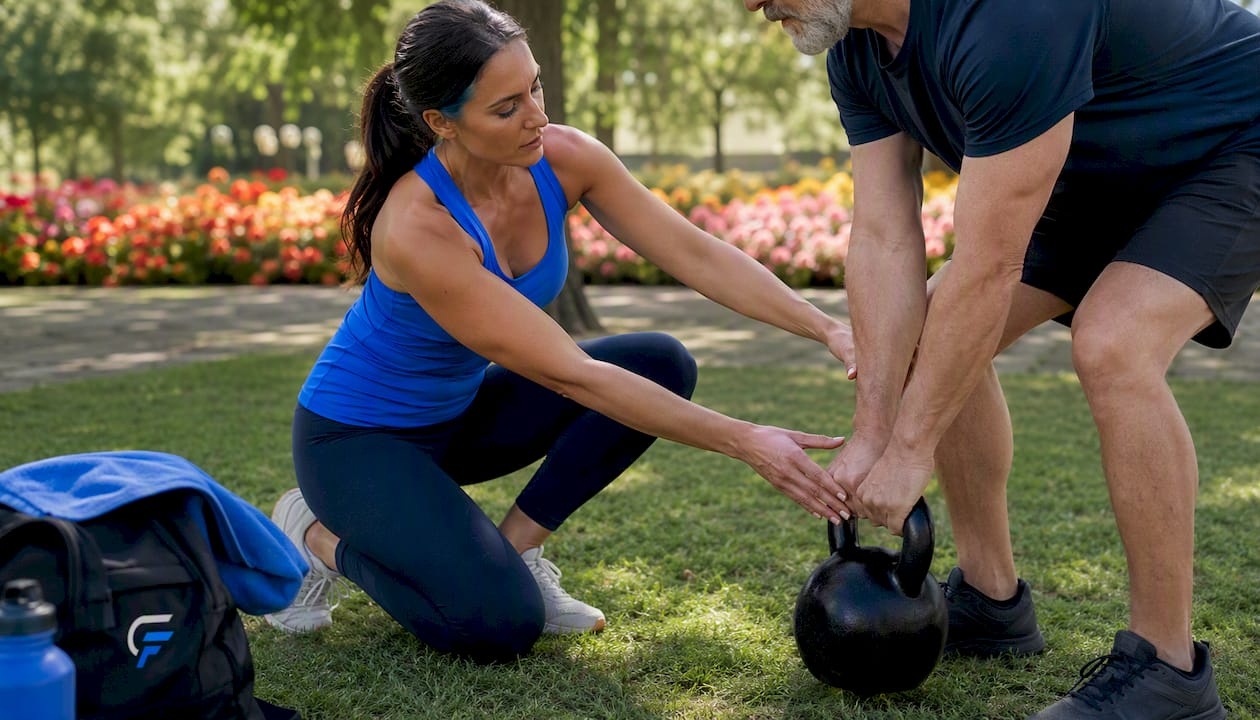
After the assessment, the first one or two sessions focus almost entirely on technique. Expect drills: the deadlift to teach the hinge, the swing as the first ballistic movement, and the goblet squat for lower body patterning. Practical assessment-first workflows are used by reputable coaches because they correlate with safer, faster progress. For online sessions, a coach should ask you to set up a camera at hip height so they can analyse your movement in real time or via recorded video.
Programming and follow-up
After the first fortnight (typically an assessment session plus two coaching sessions), your coach should present a four- to eight-week written plan. This plan should show progressive overload, not just a list of exercises. Expect session notes, video check-ins between sessions, and a clear point at which the programme is reassessed. Coaches who record client videos and compare movement over time can demonstrate measurable progress, which keeps motivation high and confirms the programming is working.
Which qualifications and safety checks matter for kettlebell coaches in the UK?
Not all personal training certifications cover kettlebell mechanics. A Level 3 PT qualification is the UK baseline for professional recognition and CIMSPA membership, but it does not automatically mean a coach understands the hip hinge or wrist mechanics in the rack position.
Recognised kettlebell credentials
- StrongFirst SFG I / SFG II: the most widely recognised Hardstyle kettlebell instructor certification; focuses on strength and safe mechanics.
- RKC (Russian Kettlebell Challenge): another respected Hardstyle credential with a strong emphasis on technique standards.
- IKSFA (International Kettlebell Sport and Fitness Academy): the credential to look for in Sport Style / Girevoy coaching.
- Level 3 PT with CIMSPA recognition: the UK professional standard; confirms the coach is insured and meets continuing professional development requirements.
For a deeper look at how UK trainer qualifications are structured, the personal trainer qualifications guide on Yourcoachify explains what each level means and how to verify them.
Verification checklist
Request the coach's certification number or course completion details. Check their Yourcoachify profile for verified reviews and listed qualifications. Ask for evidence of ongoing CPD and confirm they hold public liability insurance. A well-built coach profile should list primary certifications, insurance confirmation, CPD activity, and clear refund and cancellation terms. Profiles that lack these details should prompt direct questions before you book.
Safety practices to expect
Reputable coaches use structured progressions rather than jumping straight to complex movements. They screen for contraindications, build in proper warm-ups, and manage load carefully. The emphasis is always technique first, load second. Kettlebells are dynamic tools requiring specific biomechanics — wrist alignment, hip hinge mechanics, and timing — and are not interchangeable with dumbbells. A coach who treats them as such is a coach worth avoiding.
Online, in-person, or hybrid: which kettlebell coaching format suits you?
Each format has genuine strengths. The right choice depends on your experience level, your equipment, and your schedule.
| Format | Best for | Key requirement | Main limitation |
|---|---|---|---|
| In-person 1:1 | Beginners, post-injury clients | Access to a gym or coach's studio | Travel time, fixed schedule |
| Online 1:1 | Experienced movers, remote clients | Kettlebell(s) at home, camera setup | No hands-on correction |
| Hybrid | Intermediate clients, busy schedules | Occasional travel for in-person sessions | Requires planning |
For a practical breakdown of how hybrid delivery works in practice, the hybrid personal training guide on Yourcoachify covers the format in detail.
Choosing your format
- In-person coaching is the strongest starting point if you are new to kettlebells or returning from injury. Hands-on correction of the hip hinge and swing is far more effective than video feedback alone, and you can use the coach's equipment rather than buying your own.
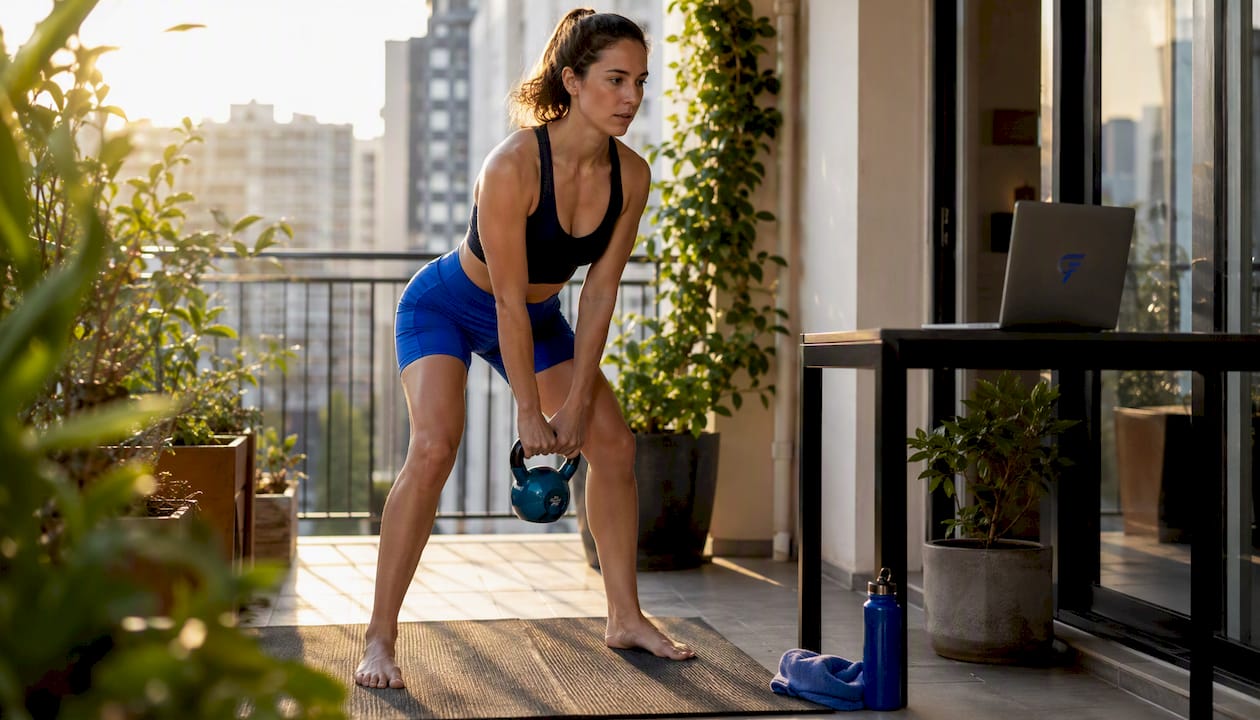
- Online coaching works well once you have solid foundational mechanics. You will need at least one kettlebell at home, a clear filming space, and a camera positioned at hip height. The advantage is flexibility and access to coaches anywhere in the UK.
- Hybrid coaching combines the best of both: complex skill work and assessments happen in person, while routine follow-up sessions move online. This suits clients who travel for work or live outside major cities.
For guidance on evaluating online coaches specifically, the best online personal trainers guide on Yourcoachify is a useful next read.
Is kettlebell training actually effective, and what coaching mistakes undermine it?
The short answer: yes, when coached and programmed correctly. Kettlebells deliver combined strength, cardiovascular, and mobility benefits, and even short, high-quality sessions can produce measurable improvements when intensity and technique are managed well. The caveat is that caveat is significant: poor coaching erases most of those benefits and adds injury risk.
"Kettlebells are not interchangeable with dumbbells. They are dynamic tools that require specific biomechanics — wrist alignment, hip hinge, and timing — and coaching that understands this distinction produces far better outcomes." — KettlebellsWorkouts
The most common coaching mistakes
Prioritising bell weight over mechanics. This is the single most common error. A heavier bell with a broken hinge pattern builds bad habits faster than it builds strength. Methodology-neutral coaching that keeps biomechanics central tends to produce the best long-term outcomes, particularly for non-competitive clients.
Treating kettlebells like static dumbbells. The swing, clean, and snatch are ballistic movements. Coaches who programme them like a bicep curl — slow, controlled, isolated — miss the point entirely and often create wrist and lower back strain in the process.
Skipping progressions. Moving a client from a two-handed swing to a single-arm snatch in two sessions is not progressive coaching. It is guesswork with a bell. Coaches with broad education — books, courses, certifications across both Hardstyle and Sport approaches — use clear progressions and evidence-based programming, which is why their clients see faster, safer results.
Ignoring methodology. Hardstyle and Sport Style are not interchangeable. Clarify which approach your coach uses and why it fits your goals before you commit to a programme.
Key takeaways
Hiring a certified kettlebell coach through a vetted UK marketplace like Yourcoachify, prioritising StrongFirst or RKC credentials, and insisting on an assessment-first session structure gives you the fastest, safest route to measurable strength and conditioning results.
| Point | Details |
|---|---|
| Prioritise credentials | Look for StrongFirst SFG, RKC, or IKSFA certifications alongside a Level 3 PT and CIMSPA recognition. |
| Insist on an assessment first | A coach who screens movement before loading reduces injury risk and accelerates your progress. |
| Clarify methodology | Hardstyle suits strength and conditioning goals; Sport Style suits endurance and competition — know which you need. |
| Track progress with video | Ask your coach to record sessions so you can compare movement quality over four to eight weeks. |
| Use Yourcoachify to compare | Search by kettlebell specialty and location, review verified profiles and ratings, then book an intro session securely. |
What good kettlebell coaching actually feels like
The first session with a genuinely skilled coach does not feel like a workout. It feels like a conversation between your body and someone who knows how to listen to it.
A thorough intro session starts with questions, not bells. The coach asks about your movement history, any niggles, and what you are hoping to achieve. Then comes the screening: a bodyweight hinge, a goblet squat hold, a shoulder check. The cues are clear and specific ("push the floor away, not the bell"), not vague encouragement. By the end of the session, you have touched a kettlebell, performed a few swings with real feedback, and left with a written note of what was observed and what comes next.
After six to eight coached sessions, the change is tangible. The hinge pattern that felt awkward in week one becomes automatic. Swings that felt heavy at 12 kg feel controlled at 16 kg. Confidence with the movement replaces the anxiety of "am I doing this right?" That shift, from uncertainty to competence, is what separates coached kettlebell training from self-directed trial and error. It is also why the assessment-first approach matters so much: a coach who knows where you started can show you exactly how far you have come.
Yourcoachify connects you with certified kettlebell coaches across the UK
Finding a qualified kettlebell workout coach used to mean trawling Instagram, hoping credentials were real, and booking blind. Yourcoachify removes that uncertainty entirely.
The process is straightforward. Search by "kettlebell" and your location, filter by session format (online or in-person) and certification type, then browse verified profiles that list qualifications, client reviews, and transformation galleries. Every profile gives you the information you need to make a confident decision before you spend a penny. Payment is handled securely through the platform, and cancellation and rescheduling terms are clearly stated on each coach's profile so there are no surprises.
Whether you are in London, Manchester, or anywhere else in the UK, find your kettlebell coach on Yourcoachify and book an introductory session today.
Useful sources and further reading
These are the most authoritative resources for kettlebell coaching credentials, technique education, and coach verification in the UK context.
- StrongFirst SFG I Kettlebell Instructor Certification — the official certification page for the SFG I credential; explains the standard, the assessment criteria, and what the qualification covers. Use this to verify whether a coach's claimed StrongFirst certification is current.
- HTK Training — a strength and conditioning resource covering ballistic training, mobility, and common kettlebell practice errors; worth reading alongside your coaching programme for deeper context on programming and movement quality.
- Yourcoachify — UK Coach Marketplace — the platform where you can search, compare, and book certified kettlebell personal trainers across the UK, with verified profiles, client reviews, and secure booking.