
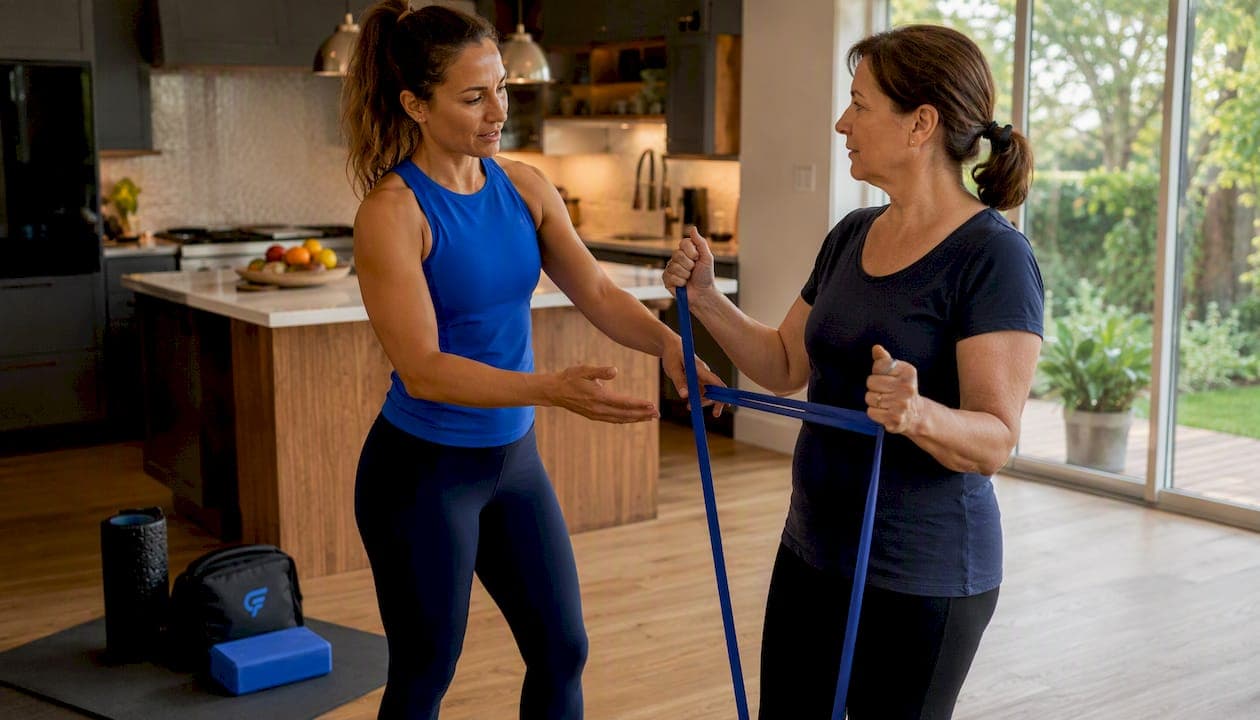
If you want a certified coach to come to you, design a programme around your space, and hold you accountable every session, in-home personal training is the right choice. Start by browsing vetted trainers on Yourcoachify to find your match today.
Three reasons people book a home visit personal trainer rather than a gym membership:
- Convenience. No commute, no parking, no waiting for equipment.
- Personalisation. Every session is built around your goals, your space, and your schedule.
- Accountability. A coach at your door is harder to cancel on than a treadmill.
Table of Contents
- What is in-home personal training and which formats can you book?
- Why do people choose a personal trainer at home?
- What does a typical session include and what does your trainer bring?
- How does booking a home training session actually work?
- What does in-home personal training cost in the UK?
- How do you vet and choose the right in-home trainer?
- What happens in your first session and how should you prepare?
- Why Yourcoachify is a trusted way to find UK in-home trainers
- Key takeaways
- The case for raising your standards when choosing a trainer
- Ready to find your in-home personal trainer?
- Useful sources for UK readers
What is in-home personal training and which formats can you book?
In-home personal training is a mobile fitness service where a certified coach brings the workout, the motivation, and often the equipment directly to your preferred location. That location could be your living room, your garden, a nearby park, or a mix of all three.
The most common formats you will encounter are:
- In-home sessions. The trainer arrives at your address and works with whatever space you have.
- Outdoor or park sessions. Useful when you want fresh air or more room to move; the trainer still brings the kit.
- Hybrid programmes. A blend of in-person visits and online coaching, which suits busy schedules well. You can read more about how this works in our hybrid personal training guide.
- Fully virtual coaching. Video-call sessions with a remote trainer; lower cost but no hands-on correction.
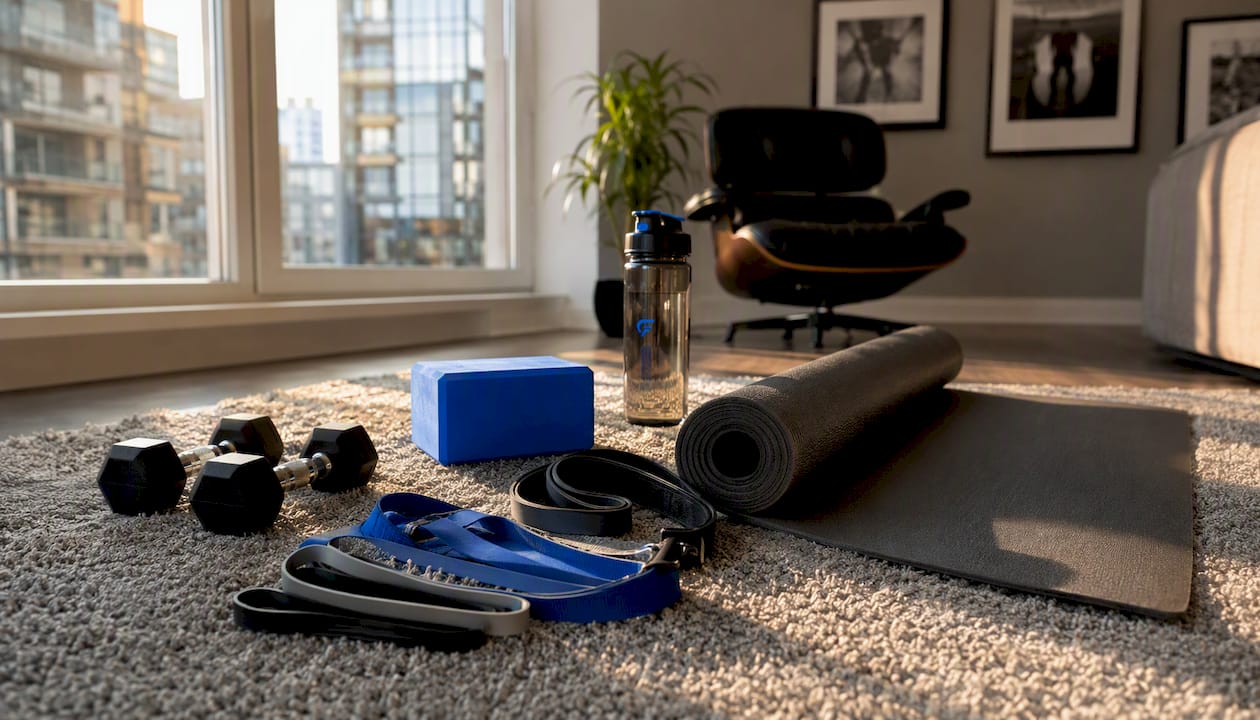
Pro Tip: You do not need a home gym. Most mobile personal trainers carry portable equipment including resistance bands, kettlebells, adjustable dumbbells, TRX straps, and sliders, all sized to fit in a car. A clear patch of floor is genuinely enough to start.
Why do people choose a personal trainer at home?
The practical benefits go beyond simple convenience, and they tend to compound over time.
Personalisation that actually fits your life. A trainer working in your home can programme around your specific environment, your furniture, your ceiling height, and your schedule. That level of specificity is difficult to replicate in a shared gym. Industry experts note that this extreme personalisation, combined with the ability to adapt to home constraints, improves both safety and adherence compared with generic gym plans.
- Consistency. Gym friction — the time and hassle of travelling, finding parking, and waiting for equipment — is a measurable driver of cancelled sessions. Removing it raises attendance for many clients.
- Privacy. Home workout coaching suits anyone who finds busy gyms intimidating, or who needs focused rehabilitation work without an audience. The controlled, judgement-free environment also helps with technique, particularly for beginners or those returning from injury.
- Flexibility. Sessions can be scheduled around school runs, work calls, or shift patterns in a way that a fixed gym class cannot match.
Coaches also report higher client retention when sessions are booked as recurring appointments with short-term measurable goals and consistent progress checks, rather than ad-hoc visits.
What does a typical session include and what does your trainer bring?
Knowing what to expect removes the anxiety of that first booking. Here is how a standard session tends to run, and who is responsible for what.
| Responsibility | Trainer | Client |
|---|---|---|
| Equipment | Portable kit (bands, kettlebells, dumbbells, TRX) | Water bottle, appropriate footwear |
| Session structure | Movement screen, warm-up, main workout, cool-down | Clear floor space (roughly 2m x 2m) |
| Coaching | Technique cues, rep counts, rest timing | Honest feedback on discomfort or pain |
| Nutrition guidance | Brief lifestyle and nutrition coaching where qualified | Disclosure of relevant medical conditions |
| Progress tracking | Session notes, measurements, goal review | Consistency between sessions |
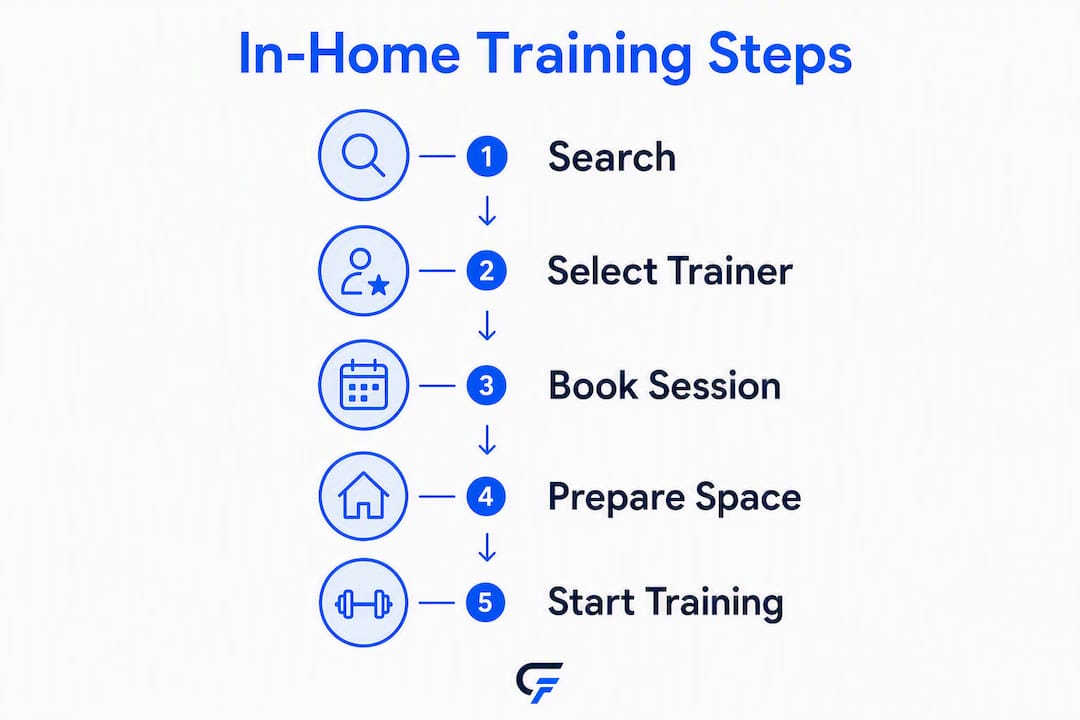
A structured session typically opens with a short movement screen to check mobility and flag any areas of concern, moves into a warm-up, then the main workout, and closes with a cool-down and a brief debrief. Where the trainer holds a nutrition qualification, they may also offer short lifestyle coaching at the end.
For clients in smaller UK homes, compact and reformer-style kits make Pilates and mobility work entirely achievable. A Pilates mini reformer kit is one example of low-footprint equipment that trainers can integrate without taking over your living room.
How does booking a home training session actually work?
The process from first enquiry to your first session is straightforward, and on a platform like Yourcoachify it typically takes a matter of days rather than weeks.
- Search and filter. Use Yourcoachify's location-based search to find trainers near you. Filter by speciality (weight loss, strength, pre/postnatal, rehabilitation) and by preference such as trainer gender or session format.
- Review profiles. Each profile shows qualifications, verified client reviews, transformation galleries, and clear pricing. You can compare several trainers before making contact.
- Initial consultation. Most trainers offer a free or discounted first consultation, either by phone, video call, or in person. This is where you discuss your goals, any injuries, and your schedule.
- Movement screening. Often built into the first paid session, this baseline assessment shapes your programme from day one.
- Schedule your first session. Agree a recurring time slot. Recurring bookings tend to produce better results than one-off sessions because they build habit and accountability.
Realistic timeline: From your first search to your first session, expect two to five days if you are decisive. Trainers with full diaries may need a week or two of lead time.
On cancellations and rescheduling: Policies vary by trainer, so check before you book. Most require 24 hours' notice to avoid a cancellation fee. Yourcoachify profiles display cancellation terms clearly so there are no surprises.

On trial sessions: Several providers offer a free or reduced-price trial session as a standard part of their booking process. If a trainer does not offer any form of trial, ask whether a shorter introductory session is available before committing to a package.
What does in-home personal training cost in the UK?
Pricing for private training sessions at home varies more than most people expect, and understanding the variables helps you compare providers fairly.
Session lengths of 30–60 minutes are most common, and packages or monthly plans typically work out cheaper per session than single bookings. A trainer who charges a higher single-session rate may offer a significantly lower per-session cost across a block of ten or twelve sessions.
The main factors that move the price up or down:
- Trainer experience and qualifications. A trainer with specialist certifications (pre/postnatal, sports rehabilitation, nutrition) will generally charge more than a newly qualified generalist.
- Location and travel. Central London rates are higher than those in smaller cities or rural areas. Travel time and transport costs are often factored into the session fee. For a detailed look at London pricing, see our personal trainer cost in London guide.
- Session length. A 30-minute session costs less in absolute terms but may not suit complex programmes.
- Equipment provided. Trainers who bring a full portable kit may charge a small premium over those who expect clients to have their own.
- Package commitment. Longer-term packages (monthly or quarterly) almost always reduce the per-session cost.
Pricing transparency matters. Trainers who list clear rates on their profiles, explain what is included, and offer a trial session are almost always more trustworthy than those who ask you to "get in touch for pricing" without any indication of range.
Opaque pricing is a red flag. If a trainer cannot give you a ballpark figure before a consultation, that is worth noting.
How do you vet and choose the right in-home trainer?
Choosing a trainer is a personal decision, but a few objective checks protect you and set the relationship up well from the start.
Qualifications to look for:
- A recognised UK Level 3 Personal Training qualification (awarded by bodies such as CIMSPA-endorsed providers, Active IQ, or YMCA Awards). Our guide to personal trainer qualifications in the UK explains what each level means.
- Relevant CPD (continuing professional development) for your specific goal, such as pre/postnatal, sports nutrition, or injury rehabilitation.
- A valid DBS (Disclosure and Barring Service) check, particularly if children or vulnerable adults are present in the home.
- Professional indemnity and public liability insurance. Ask to see evidence; a professional trainer will not hesitate to share it.
Questions to ask at consultation:
- How much experience do you have with clients who have my specific goal or injury history?
- How do you track progress and adjust the programme over time?
- What is your cancellation and rescheduling policy?
- Do you offer a trial session or introductory package?
Red flags to watch for:
- Vague or evasive answers about insurance or DBS status.
- Pressure to commit to a long package before you have met in person.
- No verified reviews or testimonials on their profile.
- Unwillingness to discuss your medical history or injury background.
Pro Tip: Verified reviews and before-and-after galleries on a trainer's profile are among the strongest trust signals available. Look for reviews that mention specific goals and outcomes, not just general praise, as these give you a realistic picture of what to expect.
What happens in your first session and how should you prepare?
A well-run first session sets the tone for everything that follows. Here is what typically happens and how to show up ready.
Typical first-session flow:
- A short conversation about your goals, health history, and any injuries or conditions.
- A movement screen and baseline tests to assess your current fitness level and mobility.
- A goal-setting discussion to agree on short-term targets and a rough programme outline.
- A short coached workout, usually lighter than a standard session, to introduce you to the trainer's style and assess your movement quality.
- A debrief covering next steps, session frequency, and any lifestyle or nutrition notes.
Practical preparation checklist:
- Wear comfortable, breathable clothing and supportive trainers.
- Clear a space of roughly 2 metres by 2 metres in your chosen room.
- Have a water bottle ready and keep snacks away from the workout area.
- If you take regular medication or have a relevant medical condition, let your trainer know before the session begins.
- Bring any physiotherapy notes or GP guidance if you are recovering from an injury.
Pro Tip: Put pets in another room and move any fragile items away from the workout space before your trainer arrives. It sounds obvious, but a curious dog mid-deadlift is a genuine safety concern, and a clear space lets your trainer focus entirely on you.
In-home training is particularly well suited to clients progressing from injury or those who need specific movement correction, because the trainer can work within your actual environment rather than a generic gym layout.
Why Yourcoachify is a trusted way to find UK in-home trainers
Finding a qualified, insured, and genuinely compatible trainer on your own takes time. Yourcoachify shortens that process by doing the vetting work before a trainer ever appears in your search results.
How Yourcoachify vets trainers:
- Qualification checks against recognised UK awarding bodies.
- Verification of professional indemnity and public liability insurance.
- DBS check confirmation where applicable.
- Review of client testimonials and transformation galleries before profiles go live.
Platform features that help you choose with confidence:
- Location-based search so you can find trainers who genuinely cover your postcode.
- Speciality filters for weight loss, strength, nutrition, pre/postnatal, rehabilitation, and more.
- Transparent profiles showing qualifications, verified reviews, pricing, and cancellation terms.
- A booking flow that keeps communication and payments in one secure place.
Whether you are looking for weight-loss specialists or a female personal trainer in London, the platform's filters make it straightforward to find someone who fits your specific situation.
Key takeaways
In-home personal training works because it removes gym friction, delivers a fully personalised programme, and puts a qualified, accountable coach in your space on your schedule.
| Point | Details |
|---|---|
| Formats available | In-home, outdoor, hybrid, and online sessions; most trainers bring portable equipment. |
| Vetting essentials | Check for a UK Level 3 qualification, DBS check, and professional insurance before booking. |
| Pricing shape | Packages and monthly plans cost less per session than single bookings; trial sessions reduce risk. |
| First session | Expect a movement screen, baseline tests, goal discussion, and a short coached workout. |
| Book via Yourcoachify | Yourcoachify lists vetted UK trainers with verified reviews, transparent pricing, and secure booking. |
The case for raising your standards when choosing a trainer
Most people spend more time choosing a new phone than they do vetting a personal trainer. That gap matters, because a poorly matched trainer, however well-intentioned, can slow your progress, reinforce bad movement habits, or simply fail to show up consistently.
The conventional wisdom says "just find someone local and give it a go." There is some truth in that, but it undersells the importance of compatibility. The trainer who gets results for a marathon runner is not necessarily the right person for someone returning from a knee replacement. Specialisation, communication style, and genuine accountability are not nice extras; they are the variables that determine whether you are still training six months from now.
What the research and practitioner experience consistently show is that ongoing professional guidance raises adherence to both movement and nutrition plans far more reliably than ad-hoc gym visits. The format, in-home or otherwise, matters less than the quality of the relationship and the structure of the programme.
Choose carefully. Ask the uncomfortable questions about insurance and DBS. Read the reviews that mention specific outcomes. And use a platform that has already done the first layer of vetting for you.
Ready to find your in-home personal trainer?
Yourcoachify gives you a faster, more confident route to booking a qualified home visit personal trainer than searching independently. Every trainer on the platform has been checked for qualifications, insurance, and client reviews before their profile goes live.
Here is why clients book through Yourcoachify rather than searching alone:
- Vetted trainers only. Qualifications, insurance, and DBS checks are confirmed before listing.
- Filters that match your goal. Search by speciality, location, gender preference, and session format.
- Verified reviews. Read real client outcomes, not just star ratings.
- Transparent pricing. No hidden fees; cancellation terms are visible on every profile.
- Secure booking. Communication and payment in one place, with no awkward cash conversations.
Find your trainer on Yourcoachify and book a consultation this week. Most clients go from first search to first session within a few days.
Useful sources for UK readers
Use these resources to verify trainer credentials, check industry standards, and read further on home fitness.
| Resource | What it helps you do |
|---|---|
| CIMSPA — Chartered Institute for the Management of Sport and Physical Activity | Verify whether a trainer holds a CIMSPA-endorsed qualification and check the UK's professional standards register for fitness. |
| UK Government — DBS checks | Understand what a DBS check covers and how to request or verify one for a trainer working in your home. |
| Active IQ — awarding body | Confirm that a trainer's Level 3 Personal Training certificate comes from a recognised UK awarding body. |
| PubMed — exercise adherence research | Read peer-reviewed evidence on how structured coaching affects long-term exercise adherence. |
| Build an effective Pilates routine at home with minimal gear — Pilates Mini | Practical guidance on adapting Pilates and mobility work to small UK home spaces with compact equipment. |
This article is general information, not professional medical or fitness advice. Always consult a qualified health professional before starting a new exercise programme, particularly if you have an existing medical condition or injury.